
Post-Disinfection Legionella Testing: UK Guide for 2026
Get instant Quote. A negative result after disinfection may offer less reassurance than expected. A water sample is a snapshot of the sampled location and conditions, not proof that the whole system will remain under control. Post disinfection legionella testing is most useful when the sampling has a clear purpose and its results are reviewed alongside the system’s wider controls.
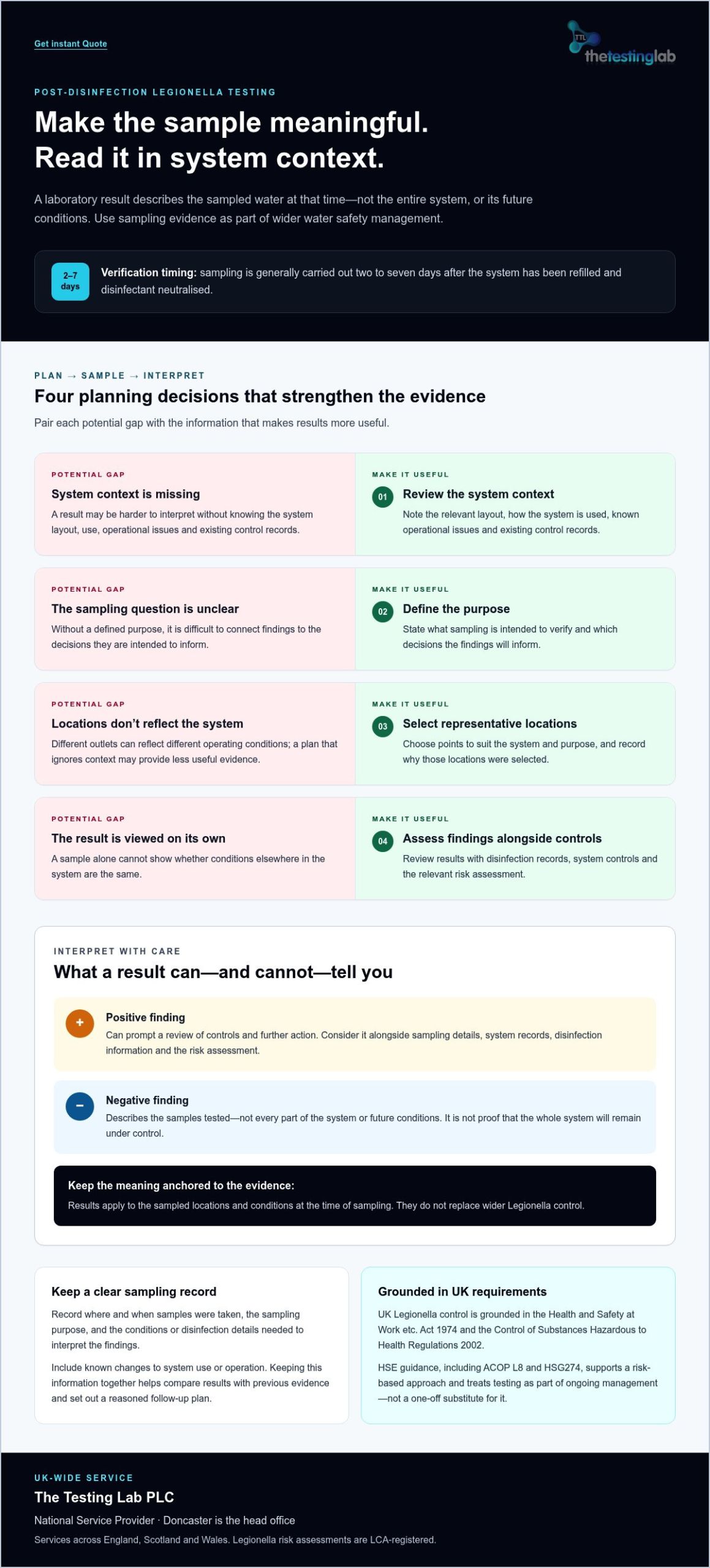
For verification, sampling is generally carried out two to seven days after the system has been refilled and disinfectant neutralised. UK health and safety requirements, including COSHH and HSE guidance in ACOP L8 and HSG274, frame Legionella control as an ongoing management process, not a one-off test. This guide covers when to sample, what results can and cannot tell you, and which records help inform next steps. The Testing Lab PLC provides UK-wide services and has over 18 years of industry experience. It is a National Service Provider with Doncaster as its head office. Every water system in England, Scotland and Wales is unique and must be assessed individually.
Key Takeaways
- Use post disinfection legionella testing to inform a wider water safety review, not as proof that the system will remain safe indefinitely.
- Before sampling, define its purpose and record the system and disinfection context so the findings can be interpreted meaningfully.
- Review results alongside sampling locations, system conditions and control records before deciding on follow-up actions.
- The Testing Lab PLC provides UK-wide Legionella testing and LCA-registered risk assessments informed by UK health and safety requirements.
What Does Post-Disinfection Legionella Testing Show?
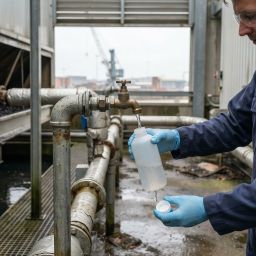
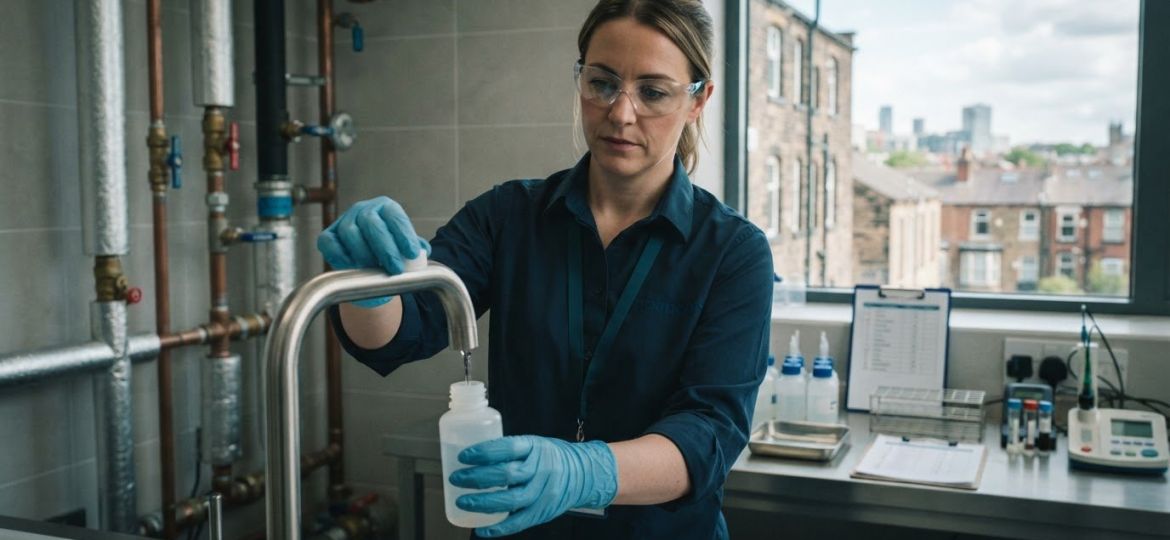
Post disinfection legionella testing involves analysing water samples collected after disinfection. It provides evidence about the sampled water at that time. It does not certify that the whole system is permanently safe. A laboratory result describes the sample tested; assessing ongoing risk means considering how the entire water system is designed, used, controlled and maintained.
That distinction is important when deciding what to do next. A result can help assess whether disinfection appears to have been effective and inform decisions about controls or follow-up. Interpret it in light of the sampling purpose, locations, treatment history and relevant system records. A result alone cannot show whether conditions elsewhere in the system are the same. For background on the organism, see Legionella bacteria.
Why the System Context Matters After Disinfection
Every water system in England, Scotland and Wales is unique and must be assessed individually. System design, use and condition all affect which sampling points provide useful evidence and how findings should be interpreted. For example, a seldom-used outlet and a regularly used outlet may reflect different operating conditions. A sampling plan or interpretation that ignores the system context may provide less useful evidence for decisions.
In the UK, Legionella control is grounded in the Health and Safety at Work etc. Act 1974 and the Control of Substances Hazardous to Health Regulations 2002. HSE guidance, including ACOP L8 and HSG274, supports a risk-based approach to managing water systems. The Testing Lab PLC is a UK-wide National Service Provider with Doncaster as its head office and over 18 years of industry experience. Its Legionella risk assessments are LCA-registered and can support an individualised review alongside test findings.
How to Plan Sampling and Interpret Results After Disinfection
Useful post disinfection legionella testing starts by deciding what the result needs to help establish. Plan the work in this sequence:
- Review the system context. Note the relevant layout, how the system is used, known operational issues and existing control records.
- Define the purpose. State what the sampling is intended to verify and which decisions the findings will inform.
- Select representative locations. Choose sampling points to suit the system and purpose, and record why those locations were selected.
- Assess the findings. Consider the results alongside disinfection records, system controls and the relevant risk assessment.
A useful report should identify where and when samples were taken, the purpose of sampling, and the conditions or disinfection details needed to interpret the findings. Record known changes to system use or operation, too. Keeping this information together makes it easier to compare results with previous evidence and set out a reasoned follow-up plan.
What a Positive or Negative Result Can, and Cannot, Tell You
A positive finding can prompt a review of controls and further action. A negative finding describes the samples tested, not every part of the system. Results apply to the sampled locations and conditions at the time of sampling, not to every location or future condition. Review them alongside system records, disinfection details and the risk assessment. HSE guidance, including ACOP L8, places testing within wider Legionella control rather than treating a laboratory result as a substitute for it.
When results need to inform a wider review, a clear sampling record connects the evidence to practical next steps. Arrange Legionella testing with The Testing Lab PLC as part of a considered water management approach.
Arrange UK-Wide Post-Disinfection Legionella Testing and Follow-Up
After disinfection, testing is most useful when the sampling plan and findings are considered as part of the system’s wider water safety management. The Testing Lab PLC provides a UK-wide service across England, Scotland and Wales. It is a National Service Provider with Doncaster as its head office and over 18 years of industry experience in Legionella testing and follow-up. Its Legionella risk assessments are LCA-registered.
Under UK health and safety requirements, including the Control of Substances Hazardous to Health Regulations 2002 and HSE guidance, test findings should inform a considered review of controls rather than be treated as stand-alone assurance. Sharing accurate site and system information helps clarify the purpose of the request and plan a suitable response.
What to Include When Requesting a Quote
Provide the site location, water system type, disinfection context and objective for testing. Relevant details may include the date and scope of the disinfection, system records, known operational issues and locations of concern. This information helps align the sampling request with the question the test is intended to answer.
The Testing Lab PLC’s Legionella testing and risk assessment services bring sampling and system context into the same water safety review. Every water system in England, Scotland and Wales is unique and must be assessed individually, so site details help inform appropriate next steps.
To arrange post disinfection legionella testing, request a quote for Legionella testing and share the available system and disinfection information. This is a practical starting point for planning testing and follow-up within your water safety management process.
Turn Test Findings Into a Clear Next Step
Use sampling evidence to inform the next stage of water safety management. Record decisions, assign follow-up actions and keep relevant system information together. This gives future reviews a clear history to build on, rather than leaving a single result without context, and supports informed decisions in line with UK health and safety requirements.
Every water system in England, Scotland and Wales is unique, so next steps should reflect conditions and risks at your site. When planning post disinfection legionella testing, share the system details and sampling purpose to help shape a relevant approach.
Request a quote for Legionella testing to take a considered step towards clearer evidence and informed water safety decisions. For a quote or call back, phone 0800 177 7264 or email [email protected].
Frequently Asked Questions
How soon after disinfection should Legionella samples be taken?
For post-disinfection verification, samples are generally collected two to seven days after the system has been refilled and disinfectant neutralised. Sampling immediately after treatment may not provide a meaningful picture if residual disinfectant remains. The plan should reflect the system and sampling purpose, rather than follow a universal routine. Record the refill and neutralisation details with the sampling information.
Does a negative Legionella test mean the water system is safe?
No. A negative result means Legionella was not detected in the sample under the conditions tested. It cannot establish that every outlet or later operating condition is clear. For example, a sample from a regularly used tap may not represent a little-used branch. Continue the site’s control measures and review relevant records if building use, water temperatures or system operation changes.
What happens if Legionella is detected after disinfection?
Detection should prompt a review, not simply be filed without action. Compare the finding with sampling locations, disinfection records, control checks and the risk assessment. The review can establish whether controls need adjustment, further investigation or additional remedial action. The appropriate response depends on the result and system context, so document decisions and follow-up within the site’s water safety arrangements.
Can post-disinfection testing replace a Legionella risk assessment?
No. Testing checks sampled water, while a risk assessment considers foreseeable risks and informs controls under UK health and safety requirements, including COSHH and HSE guidance. The Testing Lab PLC provides LCA-registered Legionella risk assessments for UK-wide sites, including Carlisle, Chester, Lancaster, Liverpool, Manchester, Preston, Salford, Berwick-upon-Tweed, Durham, Middlesbrough, Newcastle upon Tyne, Sunderland, Bradford, Doncaster, Huddersfield, Hull, Leeds, Sheffield and Wakefield.
Article by
P J F Thomas
CEO and Founder of TTL plc.
Disclaimer
Items declared are AI generated but do reflect our services. Please get in contact if you have any questions.