
Legionella Testing and Sampling for Middlesbrough Flats
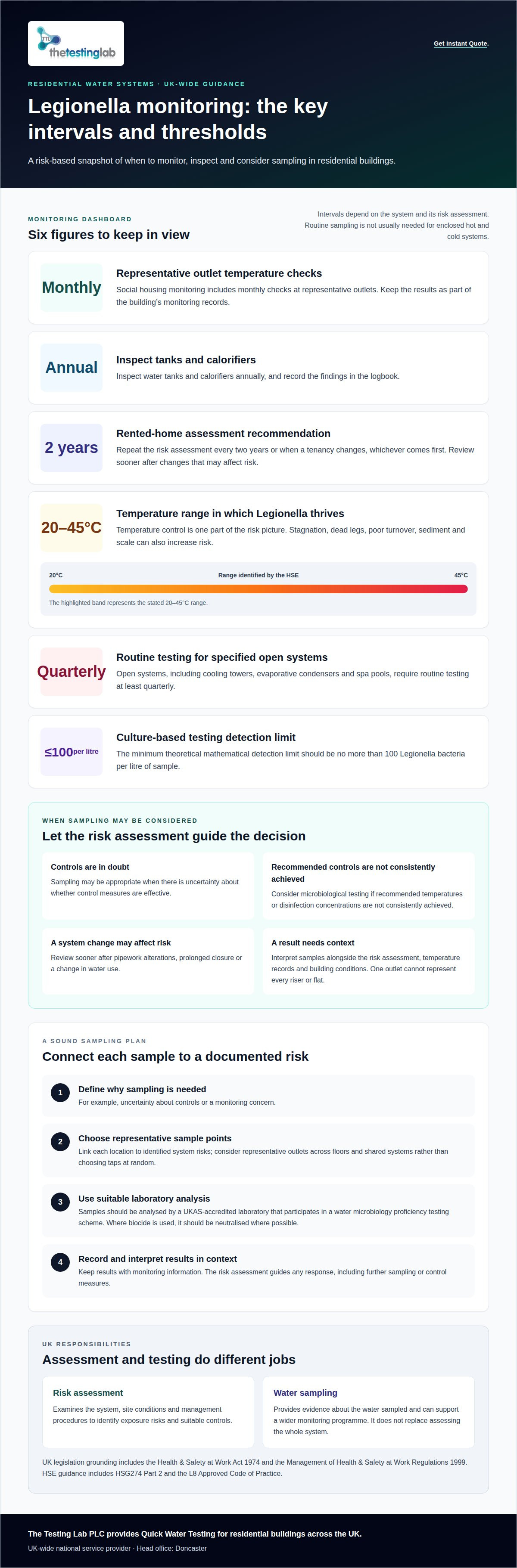
Get instant Quote. Monthly temperature checks at representative outlets are part of monitoring in social housing, but routine Legionella sampling isn’t usually required for enclosed hot and cold water systems. For multi-storey residential buildings in Middlesbrough, Legionella testing and sampling should follow the system’s risk assessment, with testing considered when control measures are in doubt or recommended temperatures or disinfection levels aren’t consistently achieved.
That distinction matters: sampling provides useful evidence, but it does not replace assessing and managing the water system. Temperature, stagnation, pipework layout and building use all help determine which checks are appropriate.
This guide explains how often hot and cold water systems should be monitored, when Legionella testing may be needed and how a sampling plan supports risk assessment. It also outlines the UK-wide responsibilities that apply to those managing residential buildings, so you can understand the next steps and keep records aligned with the risks identified.
Key Takeaways
- Understand who is responsible for identifying and managing Legionella risks in rented and shared residential buildings.
- Learn which changes or signs of ineffective controls can make further testing appropriate.
- See how a defined sampling plan links sample locations and methods to the water system’s identified risks.
- Find out how specialist water testing and risk assessment can support a consistent monitoring approach.
Legionella risk assessment for buildings and rented homes
The National Archives states that landlords and duty holders of domestic, residential and commercial properties in Middlesbrough have responsibilities under the Health & Safety at Work Act 1974. The Management of Health & Safety at Work Regulations 1999 also apply to landlord and duty-holder responsibilities, according to The National Archives.
Competent Risk Assessment
A competent person can identify how a building’s water system is configured, where Legionella bacteria could multiply, and which controls are appropriate. For flats, the assessment should consider tanks, pipework, outlets, water use and management arrangements, then record findings and control measures. HSE guidance for landlords and managing agents includes HSG274 Part 2, the L8 Approved Code of Practice and COSHH. Together, these support risk assessment and legionella control across the UK.
Assessment Versus Testing
A legionella risk assessment examines the system, site conditions and management procedures to identify exposure risks and set out suitable risk management. Testing is different: it involves collecting water samples to detect Legionella and can support a wider monitoring programme. For Middlesbrough properties, samples should be analysed by a UKAS-accredited laboratory that participates in a water microbiology proficiency testing scheme. A laboratory result provides evidence about the sampled water; it does not replace assessment of the whole system.
Assessment Timing and Reviews
Arrange an assessment when responsibility for a property begins, or when the system’s condition and management need evaluating. For rented homes, a recommendation is to repeat the assessment every two years or when a tenancy changes, whichever comes first. Review it sooner after changes that could affect risk, such as pipework alterations, a prolonged closure or a change in water use. Update the identified hazards, controls, responsibilities and records so the assessment reflects how the building is actually used.
When hot and cold water systems may need testing
Routine sampling isn’t usually needed for enclosed hot and cold systems. The decision depends on risk, temperature control and monitoring records across UK premises.
Water System Risks
The Health and Safety Executive identifies 20-45 °C as the range in which Legionella thrives. Stagnant water, dead legs, poor turnover, sediment and scale can increase legionella risk. A building survey should consider how water moves through shared risers and branch pipework, alongside the needs of vulnerable users. Open systems, including cooling towers, evaporative condensers and spa pools, require routine testing at least quarterly.
System Assets and Site Inspections
A site inspection maps relevant assets, including storage tanks, calorifiers, outlets, thermostatic mixing valves and pipework. In multi-storey blocks, this helps identify infrequently used taps, long pipe runs and outlets where water may stagnate. Social housing monitoring includes monthly temperature checks at representative outlets. Inspect calorifiers and water tanks annually, recording the findings in the logbook.
For enclosed systems, microbiological testing may be needed when control measures are in doubt or recommended temperatures or disinfection concentrations aren’t consistently achieved. Sampling companies serving Middlesbrough can collect water for analysis by a UKAS-accredited laboratory participating in a water microbiology proficiency testing scheme. Results should be interpreted alongside the system’s risk assessment, not in isolation. For a sampling requirement or temperature-control concern, request a water testing quote.
Legionella sampling and testing
In England, sampling should follow a risk-based plan, rather than being routine for every enclosed residential system. For Legionella testing and sampling in Middlesbrough’s multi-storey residential buildings, specify when, where and how samples will be collected. Link each location to the system and record why it has been included.
Sampling and Testing Requirements
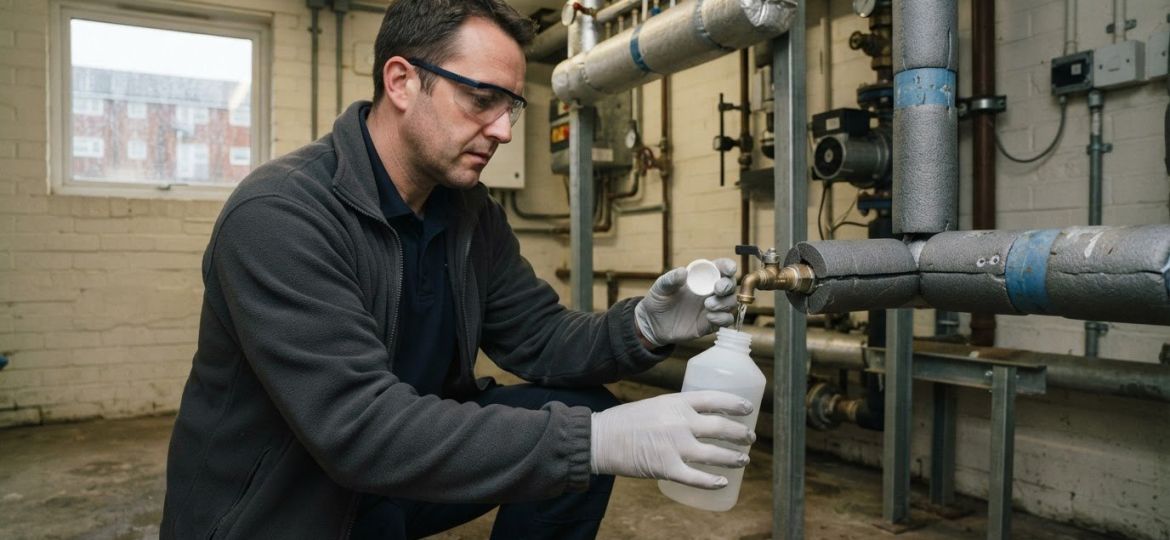
Sampling points should represent identified risks across the building, not simply convenient taps. Water samples should be analysed by a UKAS-accredited laboratory that participates in a water microbiology proficiency testing scheme. Culture-based testing should use a minimum theoretical mathematical detection limit of no more than 100 Legionella bacteria per litre of sample. Where biocide is used, it should be neutralised where possible.
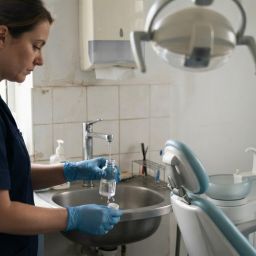
Landlords can arrange sampling through a specialist service or use an operator who is trained and properly supervised. Interpret results alongside the risk assessment, temperature records and building conditions. A sample from one outlet cannot show conditions throughout every riser or flat.
Arranging Building Sampling
Start by defining why sampling is needed, for example, uncertainty about controls or a monitoring concern. A competent sampler can then document the collection method, scope and reason for each sampling point. For multi-storey residential buildings in Middlesbrough, this may mean selecting representative outlets across different floors and shared systems, rather than choosing locations at random.
After collection, samples are carried to the laboratory for analysis, and results should be recorded with the building’s monitoring information. The risk assessment guides any response to a concerning result, including further sampling or control measures. To arrange a sampling plan and laboratory analysis, request a Legionella testing quote.
The Testing Lab PLC: Quick Water Testing
The Testing Lab PLC provides Quick Water Testing for residential buildings across the UK, with its head office in Doncaster. If a risk assessment identifies a reason to sample, or water-control results need investigation, testing can help inform the next steps.
For Middlesbrough flats, The Testing Lab PLC also offers Quick Legionella Risk Assessments, Fast Legionella Testing and Fast Legionella Risk Assessment. These services support building managers and landlords who need to assess water-system risks, arrange sampling or respond to concerns about monitoring. The appropriate next step depends on the system, the identified risks and the purpose of the investigation.
To discuss testing or assessment for a residential building, contact The Testing Lab PLC.
Set a clear next step for your building
For Middlesbrough flats, the next step is to turn water-system concerns into a defined action plan: identify what needs investigating, who is responsible and how findings will inform ongoing controls. This keeps decisions connected to the building’s actual use and UK-wide water-hygiene responsibilities.
Planning Legionella testing and sampling for multi-storey residential buildings in Middlesbrough helps clarify what evidence is needed for your site. The appropriate scope depends on the water system and the question the investigation needs to answer. Define the purpose when arranging support from The Testing Lab PLC.
To discuss the next step for your premises, contact The Testing Lab PLC. A well-defined plan gives your team a practical starting point for managing water-system risks with confidence.
Frequently Asked Questions
How and at what intervals should the water systems be checked?
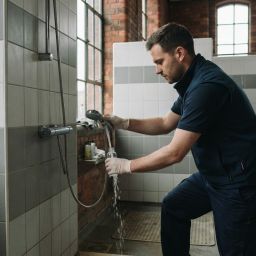
Use a monitoring schedule matched to the building’s water-system risks. In social housing, flush infrequently used outlets weekly, check temperatures monthly at representative outlets, and inspect tanks and calorifiers annually. Descale accessible shower heads and taps quarterly. Record monitoring results and keep the water-system logbook for at least five years. These tasks help identify control issues between formal assessments.
What are the benefits of using a specialist Legionella control company?
A specialist can bring structured knowledge of water-system risks, sampling scope and control measures to a building review. This is especially useful when communal pipework, storage assets or access arrangements make the system harder to assess. The Testing Lab PLC is LCA-registered for Legionella risk assessments and provides Legionella testing and sampling for residential buildings, including in Middlesbrough.
Who specifically needs one?
The duty holder remains responsible for managing Legionella risks, whether that person is a landlord, property owner, employer, managing agent or someone controlling the premises. Specialist support can help when those responsible lack the competence to assess the system, when shared water infrastructure is complex, or when monitoring raises concerns that require investigation.
How often should Legionella samples be taken in multi-storey residential buildings?
There is no single routine sampling interval for every enclosed hot and cold water system in UK residential buildings. Set sampling frequency and locations according to the risk assessment and monitoring programme, and consider testing when controls are in doubt or temperatures are not consistently achieved. Open systems such as cooling towers require testing at least quarterly. A result or change in conditions may prompt further sampling.
What Legionella sampling methods are used for communal hot and cold water systems in apartment blocks?
A sampling plan identifies suitable points across communal systems and explains why each is included. It may specify representative outlets on different floors, chosen to reflect the system layout and identified risks. Collect samples using a defined method and send them for laboratory analysis. Where biocide is present, neutralise it where possible so it does not interfere with the sample.

Article by
P J F Thomas
CEO and Founder of TTL plc.
Disclaimer
Items declared are AI generated but do reflect our services. Please get in contact if you have any questions.