

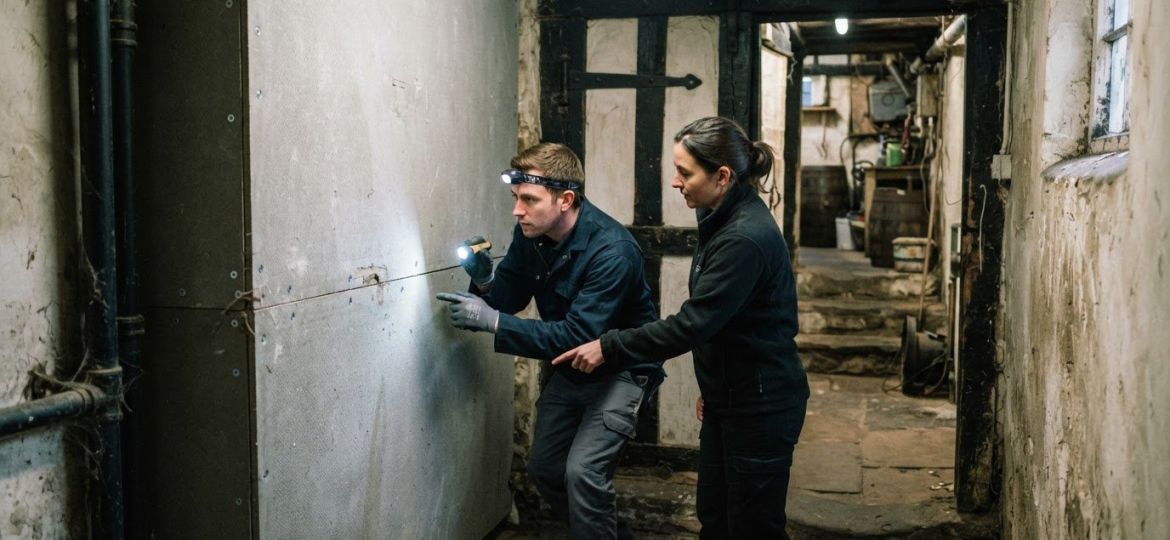
Commercial Property Asbestos Inspection in Chester Hospitality Venues
Get instant Quote. A commercial property sale doesn’t, by itself, create a specific legal requirement for the seller to provide an asbestos survey and report. But asbestos management duties still matter in non-domestic premises, including hospitality venues, so a commercial property asbestos inspection for Chester hospitality venues can help clarify what materials are present and how the information should be managed. In the UK, Regulation 4 of the Control of Asbestos Regulations 2012 sets out the duty to manage asbestos.
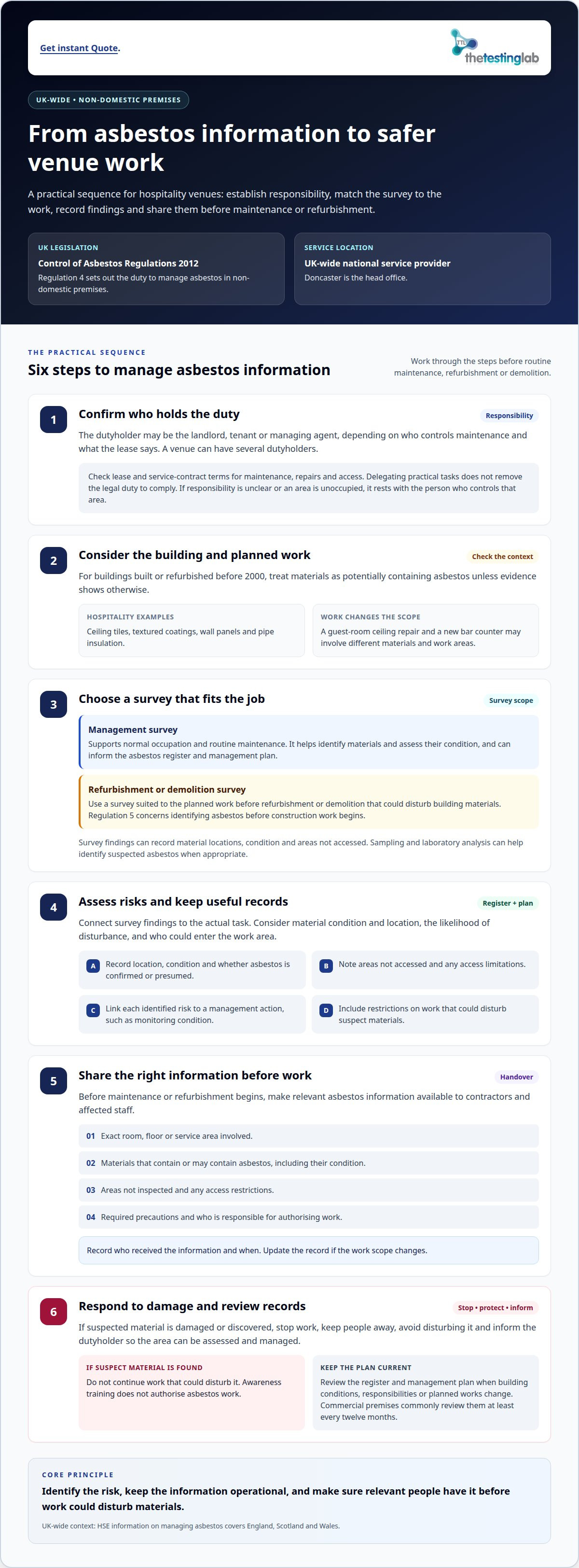
Before a sale, refurbishment or routine maintenance, clear asbestos information matters, especially when owners, tenants and managing agents share responsibilities. This guide explains who may hold the duty, when an inspection is relevant, and how to assess and communicate asbestos information. It also explains the difference between a management survey and a refurbishment or demolition survey, so you can plan suitable next steps for your venue.
Key Takeaways
- Identify who controls the venue and who holds maintenance or repair responsibilities; lease terms can allocate or share asbestos duties.
- Choose the survey scope to match the work: management surveys support normal occupation, while refurbishment or demolition surveys address planned alterations.
- Use the asbestos register and management plan to record material locations, condition and areas not accessed, then share relevant information with staff and contractors.
- Build asbestos risk assessment and clear information-sharing into maintenance and refurbishment planning to help prevent work disturbing suspect materials.
Who Is Responsible for Asbestos in a Hotel or Hospitality Venue?
In the UK, Regulation 4 of the Control of Asbestos Regulations 2012 sets out responsibilities for people with the duty to manage asbestos in non-domestic buildings, according to UK legislation.gov.uk. For buildings built or refurbished before 2000, treat materials as potentially containing asbestos unless evidence shows otherwise. Hotel examples include ceiling tiles, textured coatings, wall panels and pipe insulation.
The dutyholder may be the landlord, tenant or managing agent, depending on who controls maintenance and what the lease says. A contract can allocate or share responsibilities, but delegating tasks to an agent does not remove the legal duty to comply. Where an agreement is unclear or premises are unoccupied, responsibility rests with the person who controls the relevant area. A venue may therefore have several dutyholders.
A management survey helps identify and manage asbestos during normal occupation and routine maintenance. It is relevant when the dutyholder needs an asbestos register and management plan, particularly before work such as repairing a guest-room ceiling. The legal duty is to manage asbestos; a survey helps identify materials and assess their condition.
Before refurbishment or demolition that could disturb building materials, arrange a survey suited to the planned work. An inspection typically examines accessible materials, records their condition and locations, and notes areas not accessed; sampling and laboratory analysis can identify suspected asbestos. The time required depends on the building’s size, layout and access. For a UKAS-accredited surveyor serving Chester and Cheshire, check the relevant accreditation scope; laboratory accreditation for sample analysis alone doesn’t establish surveyor accreditation.
Drilling into a kitchen ceiling, bar partition or pipe lagging can release fibres if asbestos-containing material is disturbed. Maintenance workers should follow the asbestos management plan; awareness training does not authorise asbestos work. If suspected material is damaged or discovered, stop work, keep people away, avoid disturbing it and inform the dutyholder so the area can be assessed and managed.
Control of Asbestos Regulations 2012
The Control of Asbestos Regulations 2012 are the UK regulations referenced for asbestos survey and dutyholder information, according to UK legislation.gov.uk. They apply to managing asbestos in non-domestic premises, including hotels, pubs and restaurants. For a venue operator, the practical requirement is to identify asbestos risks, assess the materials and manage them so planned work doesn’t disturb them.
The Health and Safety Executive advises treating asbestos as present in buildings built or refurbished before 2000, unless there’s evidence showing it’s absent. A survey supports that assessment by recording suspected materials, their condition and locations, including areas that couldn’t be accessed. If sampling is appropriate, laboratory testing can help establish whether a material contains asbestos.
Before refurbishment or demolition work, the survey scope must reflect the proposed work area. A new bar counter, for example, may involve different building materials from a guest-room ceiling replacement. Regulation 5 of the 2012 regulations concerns identifying asbestos before construction work begins. This makes early coordination between the dutyholder, designer and contractor important.
Leases and service contracts can allocate or share asbestos management tasks between a landlord, tenant and managing agent. Read the clauses covering maintenance, repairs and access, then record who maintains the register and communicates findings. Delegating practical tasks does not remove the legal duty to comply. A clear division of responsibilities helps prevent gaps when tenants change or contractors begin work.
Review the register and management plan when building conditions, responsibilities or planned works change; commercial premises commonly review them at least every twelve months. To discuss asbestos-related requirements for your premises, use the asbestos services quote request.
Risk assessment and communicating asbestos information
At hospitality premises across the UK, connect asbestos risk assessments to survey findings and actual work activities. A ceiling material may remain undisturbed during normal service but face drilling during a lighting repair. Assess its condition and location, the likelihood of disturbance, and who could enter the work area. Hotel guest rooms remain part of non-domestic premises, despite their domestic-style use.
The asbestos register and management plan should be operational records, not documents kept apart from daily maintenance. For each material, record its location and condition, whether it contains asbestos or remains presumed to contain it, and any access limitations. Link each identified risk to a management action, such as monitoring its condition or restricting work that could disturb it. Laboratory analysis can clarify suspected materials when sampling is appropriate.
Before maintenance or refurbishment begins, the organisation responsible for the work should make relevant asbestos information available to contractors and affected staff. A practical handover should identify:
- The exact room, floor or service area involved.
- Materials that contain or may contain asbestos, with their condition.
- Areas not inspected and any access restrictions.
- Required precautions and the person responsible for authorising work.
Keep a record of who received the information and when; update it if the work scope changes. If a contractor finds damaged suspect material, stop work, keep people away and notify the dutyholder. HSE provides information on managing asbestos in England, Scotland and Wales. For support with asbestos-related assessment and communication, request an asbestos services quote.
The Testing Lab PLC
The Testing Lab PLC supports hospitality operators in Chester and the surrounding region with environmental and water-management services. Its head office is in Doncaster. For venue teams reviewing wider premises risks alongside asbestos responsibilities, services include Quick Legionella Risk Assessments, Fast Legionella Testing and Water Management Services. These address water-system risks, while asbestos duties still require venue-specific management and clear communication with staff and contractors.
Consider these services when water-system controls form part of operational planning, such as reviewing legionella risks in guest facilities. Keeping separate records for asbestos and water risks helps teams assign actions clearly and share relevant information with maintenance workers. Contact The Testing Lab PLC to discuss water and legionella services for your hospitality premises.
Make the Next Decision Clear
For a commercial property asbestos inspection at a Chester hospitality venue, connect the findings to planned work and day-to-day controls. Keep decisions grounded in the asbestos register, the work scope and the people who need the information. This supports a clear handover when maintenance responsibilities or contractors change.
Where asbestos duties sit alongside wider premises management, keep each risk area distinct. The Testing Lab PLC offers LCA-registered Legionella risk assessments, testing and water management services for separate operational needs; these do not replace asbestos-specific arrangements. Contact the team to discuss the issue and venue context, and identify an appropriate next step.
Send an enquiry to The Testing Lab PLC to discuss your requirements. A well-organised plan helps your team move forward with greater clarity.
Frequently Asked Questions
Is it a legal requirement to have an asbestos survey when I’m selling a commercial property?
A sale does not replace the need to understand what asbestos information exists for the building. For a smoother transaction, organise relevant property records and make clear which areas any previous inspection covered. If a buyer requests specific information, clarify the scope and timing with the professionals handling the sale rather than assuming every commercial transaction requires the same documents.
How can businesses in Chester ensure asbestos compliance?
Make asbestos controls part of ordinary operational planning. For example, include a prompt in maintenance work orders requiring staff to consult the building’s asbestos information before drilling or opening up a surface. A commercial property asbestos inspection for Chester hospitality venues can help inform those controls. Apply consistent procedures across sites in Chester and elsewhere in the UK, while tailoring them to each building.
How much does an asbestos survey in Chester cost?
There is no single survey price that suits every Chester property. The quote depends on factors such as the building’s size, layout, access arrangements, required survey scope and whether samples need laboratory analysis. A survey focused on a limited work area differs from one covering a complex venue. Provide the property details and intended purpose when requesting an instant quote.
What Does the Duty to Manage Involve?
Choose controls proportionate to the material’s condition and likelihood of disturbance. Removal is not automatically required: asbestos-containing materials in good condition may be managed in place, while damaged materials or planned work can call for a different response. For example, sound material outside work areas may need different controls from damaged material in a frequently accessed service space.
What are the asbestos regulations relating to commercial premises?
The Control of Asbestos Regulations 2012 are the UK framework for asbestos in commercial premises. For asbestos work, relevant supporting HSE guidance includes HSG247, HSG248 and HSG210. The appropriate information depends on the task: a contractor planning work on a suspect material needs task-relevant details, not just a general statement that asbestos may be present in the building.

Article by
P J F Thomas
CEO and Founder of TTL plc.
Disclaimer
Items declared are AI generated but do reflect our services. Please get in contact if you have any questions.