

Legionella Risk Assessment Services: What to Look For
Quick Summary
A legionella risk assessment is a structured review of a building’s water systems to find conditions that let Legionella bacteria grow and spread. It is required in the UK for non-domestic premises, and it should be carried out by a competent person and reviewed regularly.
- Check the assessor’s named competence and registration before any site visit is booked.
- A good report sets out priorities, owners and timescales for every recommended action.
- Ask how the provider separates assessment from the remedial work they may sell.
- Review the assessment after any change to the water system, building use or new illness.
Table of Contents
- Legionella Risk Assessment Services: What to Look For
- What a Legionella Risk Assessment Covers and Why It Is Required
- Who Needs a Legionella Risk Assessment and the Legal Duties Behind It
- Legionella Risk Assessment Checklist: What a Thorough Assessment Includes
- Legionella Risk Assessment Report: What You Should Receive Afterwards
- Legionella Risk Assessment Frequency and When to Review
- Legionella Competent Person: How to Verify Qualifications Before Work Begins
- Choosing a Legionella Risk Assessment Provider: A Practical Scorecard and Top Options
- Booking Your Legionella Risk Assessment with The Testing Lab
- Frequently Asked Questions
Legionella Risk Assessment Services: What to Look For
Last Updated: 22 November 2026
What a Legionella Risk Assessment Covers and Why It Is Required
A legionella risk assessment is a structured review of the water systems in a building, looking for conditions that allow Legionella bacteria to grow and spread.
In the UK, the duty to manage this risk sits with the person in control of the premises, often called the responsible person or dutyholder.
A good assessment does more than describe the water system. It identifies where conditions could allow growth, such as water stored at warm temperatures, stagnant sections of pipe or unused outlets, and it rates the risk so that control measures can be prioritised.
Health and Safety Executive guidance on Legionella control, ACoP L8
Who Needs a Legionella Risk Assessment and the Legal Duties Behind It
Any non-domestic premises with a water system can need an assessment. That includes offices, hotels, schools, hospitals, housing blocks with shared water systems, and industrial sites with cooling towers or process water. Landlords with shared systems in multi-occupancy buildings carry similar duties.
The legal duty is set by health and safety law, which requires the responsible person to assess and control risks to others.
Legal requirements and best practice are not always the same thing. The law sets the outcome you must achieve. Good practice describes how most competent assessors reach it.
HSE guidance on the responsibilities of duty holders for Legionella
Legionella Risk Assessment Checklist: What a Thorough Assessment Includes
A thorough assessment works through the whole water system, not just the tanks. Use this checklist when reviewing a provider’s proposal or your own records:
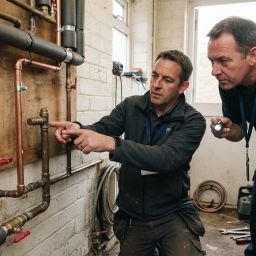
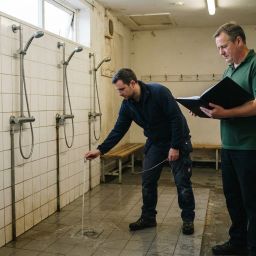
- Site survey of all hot and cold water services, storage tanks and outlets
- Mapping of the system, including dead legs and low-use outlets
- Review of water temperatures at storage, distribution and outlets
- Review of previous assessments, sampling results and maintenance records
- Identification of people who may be exposed, including vulnerable groups
- Risk rating for each identified hazard, with a clear basis for the rating
- Recommended control measures, with priorities and responsibilities
- Stated review date and triggers for earlier review
Legionella Risk Assessment Report: What You Should Receive Afterwards
The written report is the main deliverable, and it should be clear enough for a facilities manager to act on without needing the assessor to explain it again.
A thorough report normally contains:
- The scope and the date of the survey, plus the name and competence of the assessor
- A schematic or written description of the water system surveyed, including tanks, calorifiers, dead legs and low-use outlets
- Each hazard identified, with the evidence behind it (temperature readings, stagnation, condition of outlets, accessible parts of the system)
- A risk rating for each hazard, with the basis for that rating stated rather than left implicit
- Recommended control measures, each with a priority, an owner and a target date
- A stated review date and the triggers that would bring the review forward
- Reference to the written scheme of control, or a recommendation to produce or update one
Before you accept a report, check that the actions are listed in priority order and that the timescales are realistic for your site. A report that lists hazards but gives no priorities or owners leaves the duty holder unable to show that the risk was managed.
Watch out: a report that rates everything as high risk, or everything as low risk, is a warning sign. Ratings should reflect the actual conditions found, and the assessor should be able to explain any rating you query.
Turning the report into completed actions
Delivery of the report is the midpoint, not the end. The practical step most duty holders find useful is to convert the recommendations into a simple action tracker with four columns: action, owner, deadline and evidence of completion. That tracker becomes the record you show an inspector or auditor when they ask how the risk has been managed since the assessment.
A common pattern is to group actions into three buckets:
- Immediate, for example removing a dead leg, cleaning and disinfecting a tank, or bringing stored water temperatures back into range
- Short term, for example replacing inaccessible outlets, adjusting a temperature control regime, or commissioning remedial plumbing work
- Ongoing, for example monthly temperature monitoring, quarterly outlet flushing and an annual review of the written scheme
Each completed action should leave a trace: a work sheet, a photograph, a temperature log or an invoice from the contractor who did the work. Where an action cannot be completed straight away, record why, what interim control is in place and when it will be revisited.
Digital records and audit-ready evidence
Many duty holders keep the assessment, the action tracker and the monitoring records in digital form. If you use a paper system, keep the same information in one place and make sure the review date is visible.
Ask your provider whether the report is delivered in a format you can search and share, and whether they can supply a summary page for senior managers or board reporting.
Health and Safety Executive guidance on Legionella control, ACoP L8
Legionella Risk Assessment Frequency and When to Review
There is no single fixed interval written into the law for every premises. The ACoP L8 guidance says the assessment should be reviewed regularly and whenever there is reason to believe it is no longer valid, such as a change to the water system, a change in use of the building, or a new case of illness. Many duty holders review their assessments at intervals set by the assessor, often every two years, but this should be confirmed for your own premises.
Review is also needed after remedial work. If the system changes, the risk picture changes with it.
Legionella Competent Person: How to Verify Qualifications Before Work Begins
The people carrying out the assessment must be competent, and competence is something you can check before work begins rather than take on trust.

A practical way to verify competence is to ask for four things in writing:
- The name and role of the assessor who will attend, and their relevant training and experience
- Whether the provider is registered with a recognised body for water management and risk assessment, and what that registration covers
- Evidence of professional indemnity and public liability insurance
- A sample report, with client details removed, so you can judge the depth and clarity of what you will receive
Registration with a recognised body can be a useful signal, but it is not the whole picture. Ask what the registration covers, risk assessment, water treatment, or both, and whether it is current.
Watch out: a proposal that names a senior assessor but does not confirm who will attend on the day can lead to a less experienced person carrying out the survey. Confirm the attending assessor in writing before the visit.
A practical provider-selection scorecard
When comparing providers, score each one against the same criteria and ask for a written quote for your premises rather than relying on published figures. The table below is a starting point; add criteria that matter to your organisation, such as experience with your building type or with multi-site portfolios.
| Criterion | What to check |
|---|---|
| Competence | Named assessor, relevant training, registration and insurance |
| Scope | Whether all water systems and outlets are included, and what is excluded |
| Report quality | Clear priorities, owners, timescales and a stated review date |
| Follow-up | Support with remedial actions, re-review and action tracking |
| Records | Digital, searchable reporting and a summary page for managers |
| Independence | Whether the provider also sells the remedial work, and how that is managed |
Independence is worth a specific question. A provider that both assesses and carries out remedial work is common and can be convenient, but you should ask how they separate the two so that recommendations are not shaped by the work they hope to win. A clear answer is a good sign; a vague one is worth probing.
Matching the provider to your building type
Scope and findings differ by building and system type, so ask for examples relevant to yours:
- Offices and light commercial premises, typically smaller systems, with the main risks around low-use outlets, dead legs and infrequently used showers
- Care settings and healthcare, higher exposure risk for vulnerable people, so the assessment usually needs to consider outlets, showers, humidifiers and any augmented care water systems
- Schools and leisure facilities, seasonal use and long closures create stagnation risk, so the review triggers should include term dates and shutdowns
- Residential blocks with shared systems, communal tanks, distribution pipework and shared outlets, with clear boundaries between landlord and resident responsibilities
- Complex or industrial systems, cooling towers, evaporative condensers and process water, where the assessment needs to cover the specific control regime for those systems
Ask each provider how their scope would change for your building type, and compare the answers. A provider that gives a generic scope for every site is unlikely to give you a report tailored to yours.
Legionella Control Association, registration and competence guidance
Choosing a Legionella Risk Assessment Provider: A Practical Scorecard and Top Options
When comparing providers, we suggest scoring each one against the same criteria. Pricing depends on the size and complexity of the site, so ask for a written quote for your premises.
| Criterion | What to check |
|---|---|
| Competence | Assessor qualifications and professional registration |
| Scope | Whether all water systems and outlets are included |
| Report quality | Clear priorities, owners and timescales |
| Follow-up | Support with remedial actions and re-review |
| Records | Digital, audit-ready reporting |
The Testing Lab is one provider to consider. We are UKAS-accredited for testing and inspection, LCA-registered for water management and risk assessments, and have over 18 years of industry experience. We provide national coverage with local operatives across England, Scotland and Wales, and our bespoke digital reporting software is designed to keep records easy to share.
Other providers in the market also offer legionella risk assessments. Compare their scope, qualifications and written quotes against the scorecard above before deciding.
Booking Your Legionella Risk Assessment with The Testing Lab
If you are ready to book, you can request a quote from The Testing Lab’s website, and the team can confirm the survey details before any site visit.
Frequently Asked Questions
What does a professional Legionella risk assessment include?
A professional Legionella risk assessment identifies the water systems on a premises, such as hot and cold water supplies, storage tanks, showers and outlets that are rarely used. It assesses where conditions could allow Legionella bacteria to grow, including water temperature, stagnation and the presence of sludge or scale. The assessor then rates the risk, recommends control measures and sets out actions with timescales. The outcome should be a written report that the responsible person can use to manage ongoing compliance with the Approved Code of Practice L8 and HSG274 guidance.
Who is qualified to carry out a Legionella risk assessment?
The assessment should be carried out by a competent person who has the training, knowledge and experience to understand water systems and Legionella control. In the UK, the Approved Code of Practice L8 expects the responsible person to appoint someone competent for this work. Ask providers which qualifications their assessors hold, whether they are trained to the relevant guidance, and whether they can show evidence of current competence. Membership of a recognised body such as the Legionella Control Association is a useful signal to check.
How often should a Legionella risk assessment be reviewed?
A Legionella risk assessment should be reviewed regularly and whenever something changes that could affect the risk. This includes alterations to the water system, changes in how the building is used, a new occupancy profile, or a case of suspected infection. Many dutyholders schedule a periodic review as part of their wider health and safety arrangements. The review frequency should be set by the assessor and responsible person based on the system’s complexity and the risk rating, not on a fixed figure alone.