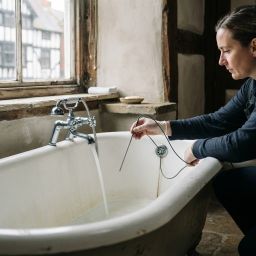

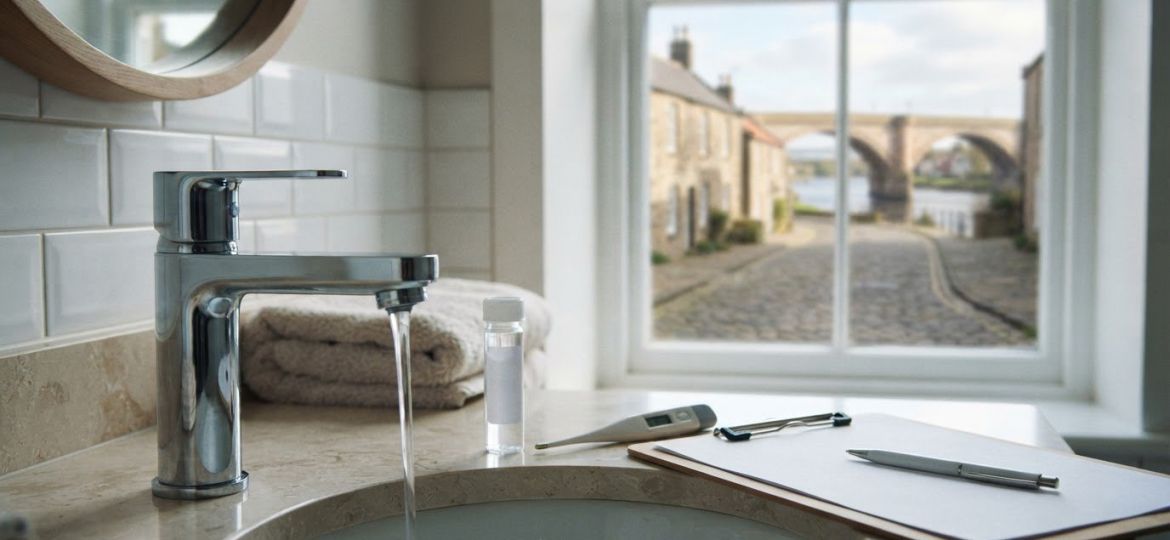
Urgent Legionella Testing for Berwick-upon-Tweed Holiday Cottages
A Legionella risk assessment, not a test certificate, is the starting point for a Berwick-upon-Tweed holiday cottage. Owners must assess and control Legionella exposure risks under UK health and safety duties, including the Health and Safety at Work Act 1974, according to The National Archives (legislation.gov.uk). Routine Legionella testing isn’t required for every cottage, so urgent Legionella testing for Berwick-upon-Tweed holiday cottages depends on the water system and the risks identified.
When guests are due and a water-system concern needs attention, clear, practical steps matter. This guide explains when an assessment is needed, when testing may help, and how systematic checks and controls can reduce risk.
You’ll also learn how hot tubs, periods of vacancy and private water supplies affect the approach, helping you identify the right next step for your property.
Key Takeaways
- UK holiday-let owners must assess and control Legionella exposure risks under COSHH and the Health and Safety at Work Act 1974, according to The National Archives (legislation.gov.uk).
- Consider how water temperatures, periods of vacancy and features such as hot tubs affect the risks in your cottage.
- Focus any sampling on relevant outlets and systems, with hot-tub water checks documented before each set of guests arrives.
- Use a risk assessment to identify practical controls and decide when water testing or specialist support is appropriate.
Do Holiday Lets Need A Legionella Risk Assessment?
Yes. Across the UK, holiday-let owners must assess and control Legionella exposure risks under COSHH and the Health and Safety at Work Act 1974, according to The National Archives (legislation.gov.uk). A written assessment helps connect the cottage’s water-system features with practical actions before guests arrive.
Holiday Let Risk Assessments
A written risk assessment should consider the water system, how often it is used and any periods when the property stands empty. For example, note showers in each bedroom, little-used taps, garden facilities and any hot tub. Record the hazards, controls and maintenance actions, then keep the assessment with water-system records for compliance and future bookings.
A landlord can complete the assessment if competent and aware of what the task requires. Set a reminder to review it annually and revisit it after any water-system change. Although Berwick-upon-Tweed is close to the Scottish border, the cottage is in England, so the relevant framework is UK health and safety duties.
Testing and Assessment Differences
A risk assessment examines how Legionella could grow or spread through the system and identifies suitable controls. A test analyses a water sample for Legionella, but does not assess the pipework, usage patterns or whether controls are working throughout the property. Testing is not required for every domestic holiday let, and a test certificate does not replace an assessment.
Interpret a result using the laboratory’s finding and its interpretation for that sample. An unsatisfactory result calls for follow-up, guided by the assessment and system conditions. Do not treat a single sample as a complete picture. Keep the report with the property’s written records.
Legionella risk control in holiday cottages
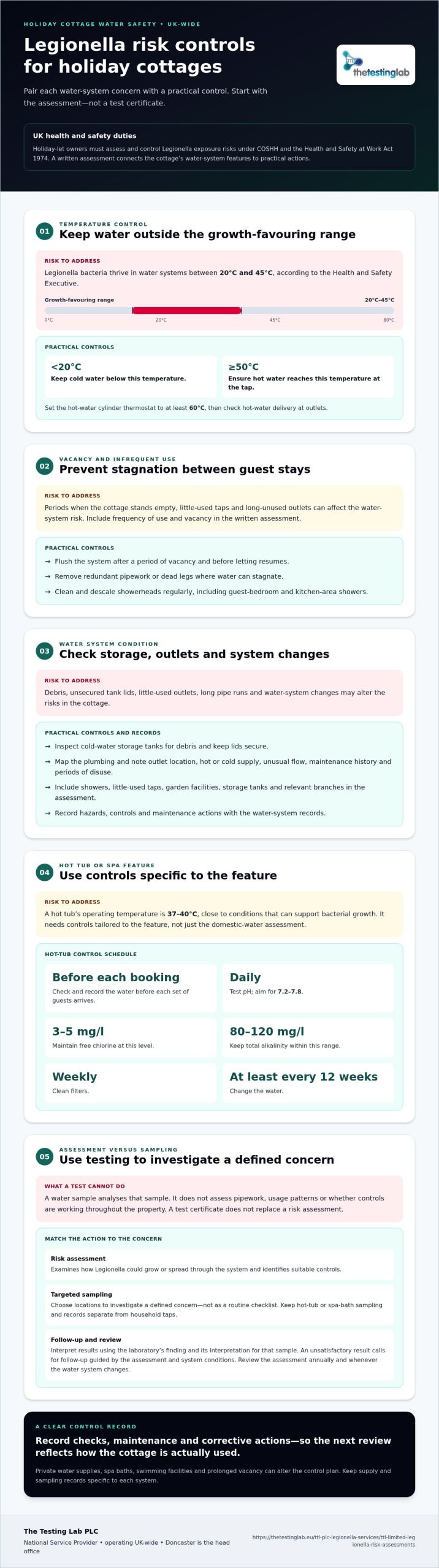
In UK holiday lets, Legionella bacteria thrive in water systems between 20°C and 45°C, according to the Health and Safety Executive. Keep cold water below 20°C and ensure hot water reaches at least 50°C at the tap, also according to the Health and Safety Executive. These operating temperatures help owners manage Legionella risk in cottages, apartments and rental properties across England.
Set the hot-water cylinder thermostat to at least 60°C, then check hot-water delivery at outlets. Inspect cold-water storage tanks for debris and keep lids secure. Remove redundant pipework or dead legs where water can stagnate. Clean and descale showerheads regularly, including showers in guest bedrooms and kitchen areas. After a period of vacancy, flush the system before letting resumes.
A hot tub needs controls tailored to that feature, rather than relying only on the domestic water assessment. Its operating temperature, 37-40°C, is close to conditions that can support bacterial growth. Check and record the water before each guest booking. Test pH daily, aiming for 7.2-7.8, and maintain free chlorine at 3-5 mg/l. Keep total alkalinity between 80-120 mg/l, clean filters weekly and change the water at least every 12 weeks.
Review the Legionella risk assessment annually and whenever the water system changes. A private supply, spa bath or swimming facility can alter the control plan, as can prolonged vacancy. Record checks, maintenance and corrective actions so the next inspection reflects the property’s actual use. For a structured review of your cottage’s water risks, request a Legionella assessment.
Which water outlets and systems should be sampled for Legionella in a holiday cottage?
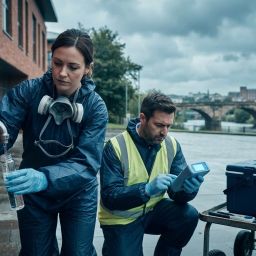
Choose sampling locations to investigate a defined concern, rather than as a routine checklist. Map the cottage’s plumbing and identify outlets linked to infrequent use, long pipe runs or system changes. For urgent Legionella testing for Berwick-upon-Tweed holiday cottages, this information helps target samples to relevant parts of the water system.
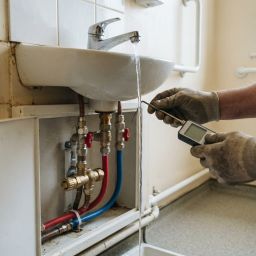
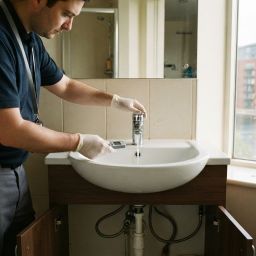
Consider taps and showers in separate areas, such as the kitchen, main bathroom and an annex. Record each outlet’s location and whether it supplies hot or cold water. Note unusual flow, maintenance history and periods when the outlet is unused. This context helps interpret findings and compare them with later samples.
Include storage tanks and branches on the system map, even if they are not direct sample points. Their configuration may help explain differences between outlets. If the property has a private supply, keep its records with the cottage’s water-system details to give the assessment a fuller picture of the supply serving the accommodation.
Keep sampling records specific to each system. A hot tub or spa bath should be treated separately from household taps, with its own relevant sample points and records. Avoid treating a result from one feature as representative of another. Owners arranging urgent Legionella testing for Berwick-upon-Tweed holiday cottages can request support with testing and identify the system or outlet causing concern.
The Testing Lab PLC: Quick Water Testing
The Testing Lab PLC provides Quick Water Testing and Fast Legionella Testing for holiday-let water systems, alongside Quick Legionella Risk Assessments and Fast Legionella Risk Assessment. These services can help when an assessment identifies a need for sampling, or when the cottage’s system, hot tub or history of vacancy needs professional review. The company is LCA-registered for Legionella risk assessments.
For Berwick-upon-Tweed owners, start by defining the concern: which system or outlet is involved, what prompted testing, and whether an assessment is also needed. This helps match the work to the property’s water risks. The Testing Lab PLC operates UK-wide, with its head office in Doncaster.
Contact The Testing Lab PLC or visit the Legionella risk assessment service page to discuss the next step.
Make your next water-safety step clear
Use the next changeover as a prompt to organise water-safety responsibilities. Clear records of concerns, sampling decisions and follow-up actions support consistent maintenance and help brief anyone preparing the property. If an unexpected result or system issue needs attention, urgent Legionella testing for Berwick-upon-Tweed holiday cottages can help identify a practical next step.
The Testing Lab PLC offers Quick Water Testing, Quick Legionella Risk Assessments and Fast Legionella Testing. The right support depends on whether you need a system assessment, water sampling or both. Share the property details and the concern prompting action to help direct your request appropriately. The company is LCA-registered for Legionella risk assessments.
Contact The Testing Lab PLC to discuss your holiday cottage’s water-safety needs and move forward with a clear plan.
Frequently Asked Questions
What if my property has its own private water supply?
Arrange water testing before you begin holiday letting, and include the supply in your property’s water-safety planning. In England, the local authority regulates private water supplies and carries out a risk assessment at least every 5 years. Keep supply records and any test results together, so you can relate them to the cottage’s water system and respond to changes in the supply.
What steps must I take?
Gather the property’s water-system information, including the supply type, storage arrangements and any recent plumbing changes. Identify who manages maintenance and guest changeovers, and keep relevant inspection and test records accessible. If a concern arises, note the affected outlet or system and what prompted it. This gives assessment or sampling a clear starting point.
Which laboratories offer urgent Legionella testing near Berwick-upon-Tweed?
The Testing Lab PLC provides Fast Legionella Testing and Quick Water Testing on a UK-wide basis, with its head office in Doncaster. It also offers Quick Legionella Risk Assessments and is LCA-registered for Legionella risk assessments. For a Berwick-upon-Tweed cottage, these services can support a defined sampling or assessment need without implying the laboratory is physically located nearby.
What is the fastest turnaround time for Legionella water testing in Northumberland?
Turnaround depends on the sampling arrangement, transport to the laboratory, sample receipt and the analysis required. To reduce avoidable delays, identify the relevant water system and outlets in advance, arrange access, and provide clear sample-point details. Timing depends on the process from collection through analysis, not simply on distance from Berwick-upon-Tweed.
Can local providers collect water samples from holiday cottages, or must owners send them to a lab?
Either approach may be used, depending on the testing service and its sampling protocol. Do not collect or dispatch samples unless the service instructions specify that method. Correct containers, handling and transport matter for sample integrity. Before sampling, arrange access to the selected outlets and record which part of the cottage’s water system each sample represents.

Article by
P J F Thomas
CEO and Founder of TTL plc.
Disclaimer
Items declared are AI generated but do reflect our services. Please get in contact if you have any questions.