
How to Verify UKAS Accreditation for Surveyors
Table of Contents
- Why Verifying UKAS Accreditation Matters for Your Surveys
- Understanding UKAS Accreditation and What It Covers
- Searching the UKAS Accredited Organisation Directory
- Checking UKAS Accreditation Scope for Your Specific Needs
- How to Check UKAS Accreditation Is Valid and Current
- Reading and Verifying a UKAS Accreditation Certificate
- What to Do If You Cannot Find a Surveyor in the UKAS Directory
- Conclusion
- Frequently Asked Questions
Last Updated: October 16, 2026
Why Verifying UKAS Accreditation Matters for Your Surveys
When you hire a surveyor, you need confidence they’re qualified to do the job properly. UKAS accreditation is your assurance that they meet strict, independent standards. It’s not just a badge on a website, it’s proof that someone has been assessed and approved to deliver reliable results.
At The Testing Lab, we understand how critical this verification step is. Facilities managers, property developers, and compliance officers across the UK rely on accredited surveyors to manage building risks, ensure regulatory compliance, and protect their teams. Without proper accreditation, you could face safety gaps, failed audits, or costly rework.
This guide explains how to verify UKAS accreditation for surveyors. We’ll walk you through the official directory, show you what to check, and help you understand what accreditation actually covers.
UKAS accreditation proves a surveyor has met independent, nationally-recognised standards for competence and reliability. Always verify it before hiring.
Understanding UKAS Accreditation and What It Covers
UKAS stands for the United Kingdom Accreditation Service. It’s the sole national accreditation body recognised by the UK government. UKAS assesses organisations against international standards to confirm they’re competent to do what they claim.
For surveyors, the most relevant UKAS standards are:
- ISO/IEC 17020, for inspection bodies (asbestos surveys, building inspections)
- ISO/IEC 17025, for testing and calibration laboratories (environmental testing, water analysis)
UKAS accreditation covers specific scopes of work. A surveyor accredited for asbestos surveys may not be accredited for legionella risk assessments. The scope defines exactly what work they’re qualified to perform.
When you see UKAS accreditation listed, you’re looking at an organisation that has:
- Been independently assessed by UKAS assessors
- Demonstrated technical competence in their field
- Shown they follow proper procedures and quality controls
- Committed to ongoing compliance and regular reassessment
This matters because accreditation creates accountability. If an accredited organisation fails to meet standards, UKAS can suspend or withdraw their accreditation. That’s leverage you don’t have with unaccredited providers.
UKAS accreditation is not the same as being “certified” or “registered” with a trade body. It’s a higher standard, formal government-backed assessment of competence.
Searching the UKAS Accredited Organisation Directory
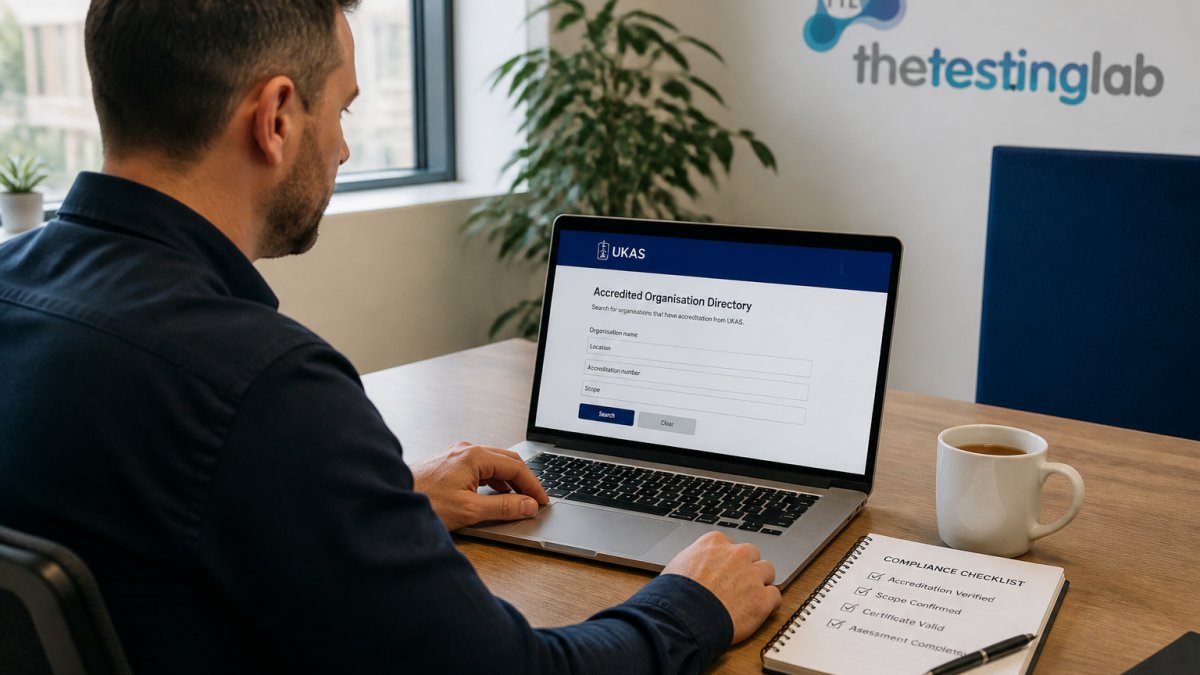
The easiest way to verify UKAS accreditation for surveyors is to search the official UKAS directory. This is a free, publicly-available database maintained by UKAS itself.
Here’s how to search:
- Go to the UKAS website at UKAS accredited organisation search
- Click on “Find an Accredited Organisation”
- Use the search filters to narrow results:
- Enter the organisation name (or leave blank to browse all)
- Select the type of accreditation you need (inspection, testing, calibration)
- Choose the relevant scope (asbestos, legionella, geotechnical, etc.)
- Review the results, each listing shows the organisation’s accreditation number and scope details
The directory updates regularly. When you find an organisation, note their accreditation number. This is your reference point for verification.
What the directory shows you:
- Organisation name and contact details
- Accreditation number (always starts with a number)
- Type of accreditation (inspection, testing, calibration)
- Scope of work they’re accredited for
- Date of last assessment
- Current accreditation status
If an organisation doesn’t appear in the directory, they’re not UKAS-accredited. That’s a red flag. Don’t assume they’re unqualified, they may have other credentials, but you’ve lost the independent verification that UKAS provides.
Checking UKAS Accreditation Scope for Your Specific Needs
Finding an organisation in the directory is just the first step. You also need to check their scope matches your actual requirement.
Scope defines the specific work an organisation is accredited for. It’s detailed and technical. An organisation might be accredited for:
- Asbestos surveys in buildings (but not soil surveys)
- Legionella risk assessments (but not water sampling)
- Geotechnical testing for ground stability (but not structural testing)
When you look at an organisation’s directory entry, the scope section lists exactly what they’re approved to do. Read it carefully.
Common scope examples:
- “Management surveys for asbestos in buildings”
- “Sampling and analysis of water for legionella bacteria”
- “Geotechnical site investigation and ground stability assessment”
- “Inspection and reporting on building condition and defects”
If your need isn’t listed in their scope, they’re not accredited for that work. They may still be able to do it, but not under UKAS accreditation.
This matters for compliance. If regulations require UKAS-accredited work, using someone outside their scope creates a gap. You could face audit failures or enforcement action.
Never assume accreditation covers everything a surveyor does. Check the scope section of their UKAS entry. If your specific work isn’t listed, ask them directly or find someone whose scope includes it.
How to Check UKAS Accreditation Is Valid and Current
UKAS accreditation isn’t permanent. Organisations must maintain standards and pass regular reassessment. You need to confirm the accreditation is still active.
Key dates to check:
- Last assessment date, when UKAS last inspected them
- Accreditation expiry date, when their current accreditation ends
- Status, shows “accredited” or “suspended” or “withdrawn”
The directory clearly displays these dates. If the expiry date has passed, the accreditation has lapsed. If status shows anything other than “accredited,” don’t use them for accredited work.
What to do if dates are unclear:
Contact the organisation directly and ask:
- “When was your last UKAS assessment?”
- “When does your current UKAS accreditation expire?”
- “Can you provide a copy of your current UKAS certificate?”
A legitimate accredited organisation will answer these questions immediately. They should be proud of their accreditation and happy to prove it.
Red flags:
- They can’t tell you when they were last assessed
- They claim accreditation but aren’t in the UKAS directory
- Their accreditation date is more than 3 years old with no recent reassessment
- They offer to do work outside their listed scope “because they have the skills”
Any of these suggests they’re not genuinely maintaining UKAS standards.
Reading and Verifying a UKAS Accreditation Certificate
If a surveyor or organisation sends you a UKAS certificate, you can verify it independently.
What a genuine UKAS certificate shows:
- Organisation name and accreditation number
- The standard they’re accredited against (ISO/IEC 17020 or 17025)
- Scope of accreditation (the work they’re approved for)
- Issue date and expiry date
- UKAS logo and official language
How to verify a certificate:
- Check the accreditation number matches the directory listing
- Confirm the expiry date hasn’t passed
- Cross-reference the scope against your specific requirement
- Visit the UKAS website and search for the organisation by their accreditation number, the certificate details should match
Don’t rely on a certificate alone. Always cross-check with the live directory. Certificates can be outdated or, in rare cases, forged.
A genuine UKAS certificate is one piece of evidence. The live directory is your source of truth. If the certificate and directory don’t match, ask questions before proceeding.
What to Do If You Cannot Find a Surveyor in the UKAS Directory
Sometimes you’ll search and find no UKAS-accredited providers for your specific need in your area. This happens, accreditation is specialist and not every region has full coverage.
Your options:
1. Expand your search geographically
UKAS accreditation is national. A surveyor based elsewhere can travel to your location. Search the full directory without geographic filters. Many organisations operate across multiple regions.
2. Check for alternative accreditations
Other bodies offer accreditation or registration:
- LCA (Legionella Control Association), for water safety and legionella risk assessment
- BOHS (British Occupational Hygiene Society), for occupational health and asbestos
- CIAT (Chartered Institute of Architectural Technologists), for building surveys
- RICS (Royal Institution of Chartered Surveyors), for property surveys
These aren’t UKAS, but they’re recognised and regulated. Check their directories too.
3. Ask about accreditation plans
If an organisation isn’t currently UKAS-accredited but operates in your area, ask if they’re working towards it. Some smaller firms are building the systems and competence needed for accreditation.
4. Contact UKAS directly
UKAS helpdesk for accreditation enquiries can point you toward accredited organisations. They may have leads you haven’t found.
5. Work with a national provider
The Testing Lab operates across the UK with UKAS accreditation (No. 7758) for asbestos surveys, legionella risk assessments, and geotechnical testing. We have local operatives in England, Scotland, and Wales, so geographic barriers don’t apply.
If you’re struggling to find accredited support locally, a national provider with proven coverage often solves the problem quickly.
Conclusion
Verifying UKAS accreditation for surveyors is straightforward once you know where to look. Use the official UKAS directory, check the scope matches your need, confirm the accreditation is current, and cross-reference any certificates you receive.
This verification step protects you. It ensures the surveyor you hire has been independently assessed and is held to recognised standards. For facilities managers, property developers, and compliance officers managing building safety and regulatory risk, that assurance is invaluable.
If you need UKAS-accredited surveys for asbestos, legionella, or geotechnical work, The Testing Lab delivers rapid, reliable results across the UK. Our accreditation (No. 7758) covers inspection and testing to ISO/IEC 17020 and ISO/IEC 17025 standards. We provide digital reporting, local response times, and the expertise to handle multi-site compliance at scale. Get an instant quote from The Testing Lab and see how we can simplify your compliance obligations.
Frequently Asked Questions
How do I check whether a surveyor is UKAS accredited?
Visit the UKAS website and use their free online directory to search for accredited organisations by name, location, or accreditation type. Enter the surveyor’s company name and verify they hold the specific accreditation standard you need, such as ISO/IEC 17020 for inspection bodies or ISO/IEC 17025 for testing laboratories. Check that the accreditation status shows as ‘Current’ and matches the scope of work you require.
Does UKAS accreditation cover every service a surveying company offers?
No. UKAS accreditation applies only to specific services listed within the organisation’s accreditation scope. A surveyor might be accredited for asbestos surveys but not for legionella risk assessments, or vice versa. Always check the scope section of their accreditation certificate to confirm the exact services covered. If a service you need isn’t listed, ask the surveyor whether they can provide it under accreditation or if it falls outside their current scope.
What does a UKAS accreditation certificate show?
A UKAS accreditation certificate displays the organisation’s name, the accreditation number, the relevant ISO standards held, the issue and expiry dates, and a detailed scope section listing all accredited services. The scope is the most critical part, it specifies exactly which tests, inspections, or assessments the organisation is accredited to perform. The certificate also shows whether the accreditation is full or conditional.
How can I check whether a UKAS accreditation is still valid?
Check the expiry date on the accreditation certificate or in the UKAS online directory. Accreditations are typically renewed every four years. Look for the ‘Current’ status in the UKAS directory search results. If a certificate shows an expiry date that has passed, the accreditation is no longer valid. You can also contact UKAS directly or ask the surveyor to provide a current, unexpired certificate as proof of active accreditation.
