

Water temperature audits for Huddersfield engineering facilities
Responsibility for water-temperature monitoring rests with the duty holder, not the thermometer. For a water temperature audit at Huddersfield engineering facilities, the duty holder remains responsible for managing Legionella risk, while a competent specialist can assess and record how temperature controls are working.
It’s understandable to want a clear answer on who owns compliance, especially where engineering systems are complex or operational demands make routine checks harder to coordinate. Across the UK, businesses, landlords and other duty holders must manage Legionella risk; HSE guidance in HSG274 Part 2 informs water-system control.
This article explains how audits, inspections, maintenance and risk-based sampling support water hygiene, and what shapes the scope of a professional assessment. The Testing Lab PLC provides UK-wide services from its head office in Doncaster.
Key Takeaways
- The duty holder remains responsible for managing Legionella risk, even when a specialist carries out monitoring and inspections.
- Water hygiene inspections assess systems against the HSG274 Part 2 guidelines from the Health and Safety Executive.
- Inspection findings can help shape a practical maintenance plan for hot- and cold-water systems.
- Sampling is risk-based, so the water-system assessment helps determine when microbiological testing is appropriate.
Water hygiene inspections and compliance monitoring
Water hygiene inspections at Huddersfield engineering facilities link physical checks to a documented control plan. Duty holders manage Legionella risk, and the inspection scope should reflect each system’s design, use and condition.
Monitoring schedules and records
Monitoring schedules should identify the assets checked, the responsible person, the frequency and the action required when results fall outside site limits. Keep dated readings, outlet locations, inspection findings, remedial actions and completion evidence. At an engineering facility, include infrequently used outlets and areas affected by shutdowns or process changes. A clear asset register links each result to its location and follow-up, making schedules auditable and useful during handovers. Review records after water-system changes so monitoring reflects the current layout and operating conditions.
HSE guidance alignment
Water hygiene inspections assess systems against the HSG274 Part 2 Legionnaires’ disease guidelines, according to the Health and Safety Executive. An assessor reviews hot- and cold-water arrangements, identifies conditions that could support legionella bacteria and evaluates whether existing controls match the legionella risk. The findings should distinguish immediate remedial actions from routine checks, giving the duty holder a clear basis for managing health and safety. In the UK, relevant regulations and the approved code of practice inform how control measures are organised and recorded.
Compliance documentation should make responsibilities, monitoring results and follow-up actions easy to trace. A suitable and sufficient Legionella risk assessment helps determine which controls the facility needs, rather than applying the same schedule to every building.
Inspection costs depend on system size, access, asset complexity, and the condition of the records and water system. Request an instant quote to establish the scope and required checks for your facility.
Monitoring, inspection and maintenance
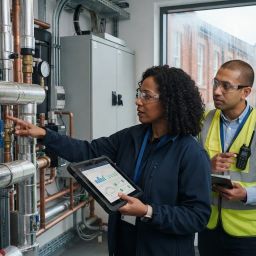
A specialist maps the water system, reviews its risk assessment, then checks representative outlets and storage assets. The audit records findings and recommends measures based on the system’s condition, use and access.
Audit steps across the facility
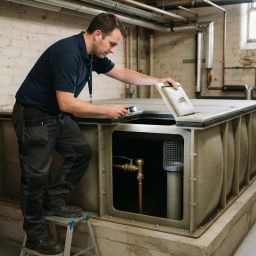
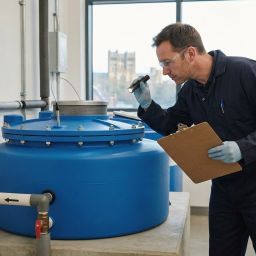
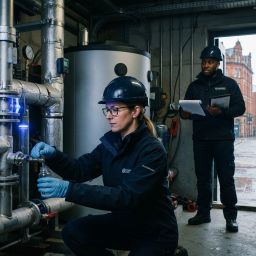
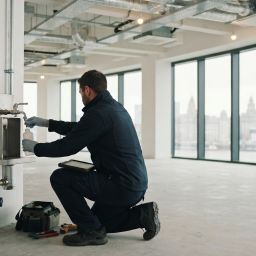
The specialist reviews system schematics and asset records, then traces hot- and cold-water routes through the facility. Temperature checks cover selected outlets, including those used infrequently or located far from the plant. The inspection also considers operational changes, such as shutdowns or altered production areas, that may affect water use. Cold-water storage tanks are checked for debris, sediment and biofilm. Findings are recorded against assets so recommendations can be assigned and followed through a practical maintenance plan.
Inspection duration planning
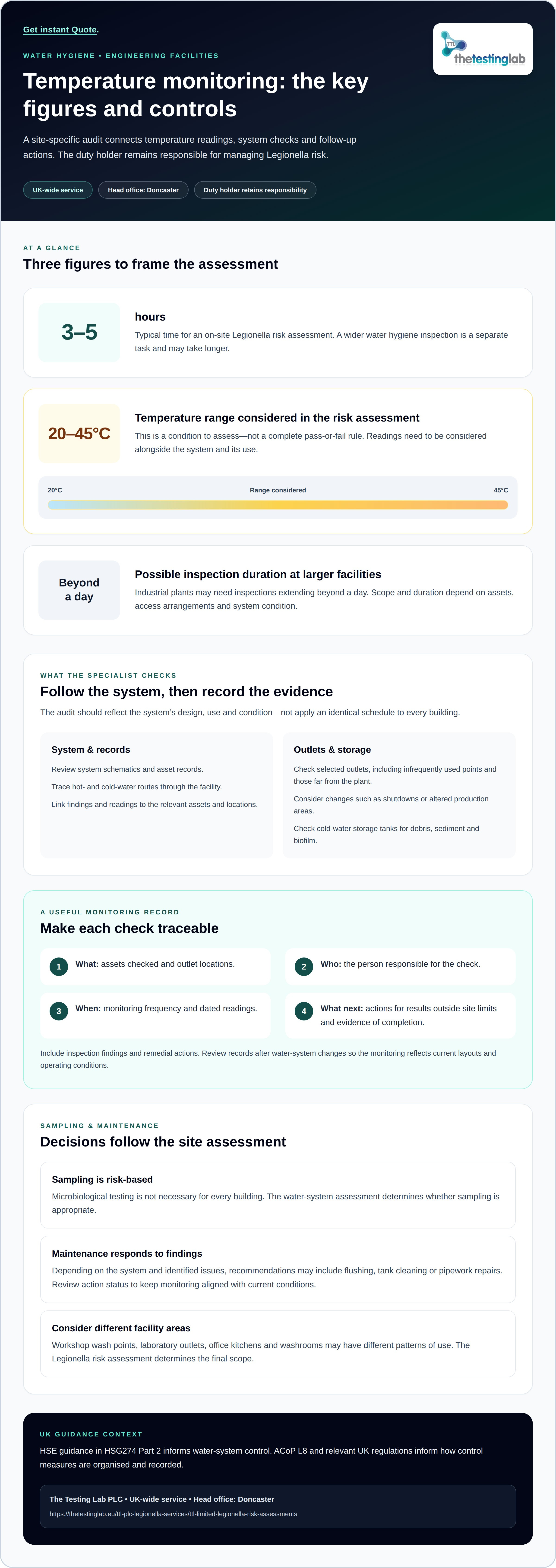
An on-site Legionella risk assessment typically takes around three to five hours. A wider water hygiene inspection is a separate task and can take longer, depending on the number of assets, access arrangements and system condition. Larger Huddersfield facilities, including industrial plants, may need inspections extending beyond a day. Planning should account for plant-room access, operating schedules and safe entry to restricted areas. Clear access arrangements help the specialist inspect relevant assets without unnecessarily disrupting engineering operations.
Maintenance follows the assessment findings, not a generic checklist. Depending on the system, recommendations may include flushing, tank cleaning or pipework repairs to address identified issues. A review of each action’s status helps keep monitoring aligned with the current water system and its operating conditions. For a structured assessment of site-specific risks, request a Legionella risk assessment.
Temperature monitoring and microbiological sampling
Across the UK, temperature checks and microbiological sampling support control measures identified by a legionella risk assessment. A water temperature audit for Huddersfield engineering facilities should account for differing water uses, outlet patterns and operating schedules.
Routine temperature checks
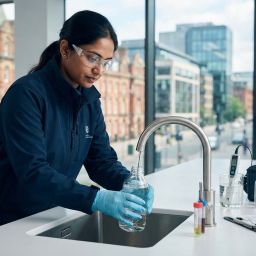
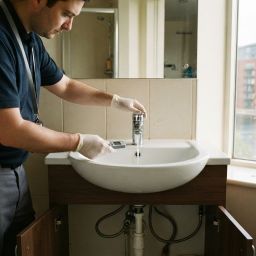
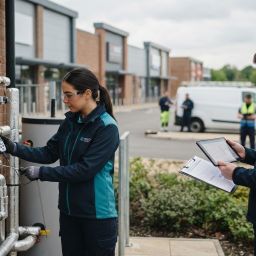
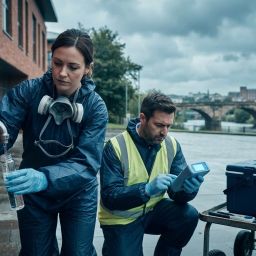
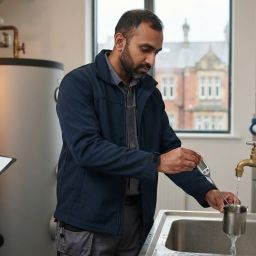
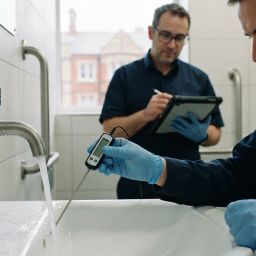
Routine monitoring records temperatures at selected points, including outlets that may be little used or far from the water source. Water between 20-45 °C is a condition considered during a Legionella risk assessment. This range informs risk assessment; it is not a complete pass-or-fail rule. The report should link readings to locations, explain required action and record how control measures will be reviewed. Sampling isn’t necessary for every building; the assessment determines whether microbiological testing is appropriate. For a water temperature audit in Huddersfield engineering facilities, this risk-based approach helps shape the checks and any sampling.
Monitoring needs by facility area
A workshop assessment considers wash points, staff facilities and changing patterns of use. In a laboratory, the specialist reviews outlets serving work areas and considers how their use fits site operations. Office checks focus on facilities such as kitchens and washrooms, including intermittently used outlets. These examples help guide the inspection, but the legionella risk assessment determines the final scope. ACoP L8 informs the UK approach to Legionella control.
Automated monitoring can help capture and organise readings across several sites, but the data still needs professional interpretation. A consistent asset register and reporting format help identify unusual results and assign follow-up actions across locations. Monitoring and sampling should follow the site-specific assessment, not assumptions based on a single reading.
Request a Legionella risk assessment to establish temperature-monitoring and sampling needs for your facility.
The Testing Lab PLC
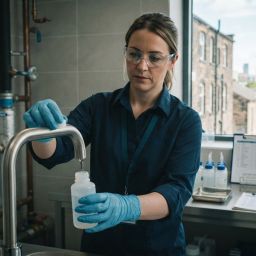
The Testing Lab PLC helps engineering facilities connect water hygiene concerns with practical assessment and testing. Its Quick Legionella Risk Assessments can help identify site-specific risks and inform appropriate monitoring and control measures. Where testing is needed, Quick Water Testing and Fast Legionella Testing provide relevant routes for investigating water quality.
For facilities in Huddersfield and across the UK, The Testing Lab PLC provides nationwide coverage from its head office in Doncaster. Its support helps duty holders understand assessment findings and determine appropriate next steps for their water systems.
Contact The Testing Lab PLC to discuss water hygiene support for your facility.
Plan the next stage of water hygiene control
Use an audit to plan ahead: align future reviews with maintenance windows, process changes and responsibility for follow-up. A water temperature audit at Huddersfield engineering facilities is most useful when its findings feed into the site’s wider water hygiene arrangements. This connects control decisions to operational changes, rather than treating an inspection as a standalone event.
For a new project, system alteration or change in how a space is used, ensure the assessment scope reflects the affected assets and current site records. That gives responsible teams a practical basis for integrating water hygiene into ongoing facility management across the UK.
Take the next step with a focused discussion about your facility. Contact The Testing Lab PLC to discuss your requirements and move forward with confidence.
Frequently Asked Questions
Who is responsible for water temperature monitoring compliance?
The duty holder is responsible for managing Legionella risk and ensuring suitable controls are in place. This may be a business, landlord or another person responsible for the premises and water system. A specialist can carry out assessment or monitoring work, but the duty holder remains accountable for acting on findings and maintaining appropriate arrangements across the site.
Do you provide documentation for compliance?
Yes. The Testing Lab PLC’s Water Management Services include monitoring and trend data, helping duty holders maintain records of water-system performance. For a Huddersfield facility, documentation is most useful when it links readings to specific assets and records follow-up actions. This supports ongoing management, while the duty holder remains responsible for maintaining compliance records.
What is a water temperature audit for engineering facilities?
A water temperature audit is a professional review of water temperatures and related system conditions, used to inform Legionella controls. At an engineering facility, the assessment can consider outlets in workshops, laboratory areas and staff offices, alongside how each space is used. The findings help identify where monitoring or further investigation may be appropriate for that specific water system.
What water temperature ranges are required for hot and cold water systems in UK commercial buildings?
Water between 20-45 °C is a condition considered during a Legionella risk assessment. This is a range relevant to risk, rather than a complete set of separate hot- and cold-water targets. For a commercial building, the assessment considers system design, use and control measures to determine appropriate monitoring requirements for individual assets and outlets.
What UK regulations and guidance apply to water temperature monitoring in engineering facilities?
The Health and Safety at Work etc. Workplace health and safety requirements provide a framework for managing risks. For Legionella control, HSE guidance includes ACOP L8 and HSG274. An engineering facility’s assessment considers its water system and operating conditions, informing suitable monitoring and control measures for the duty holder’s site arrangements.

Article by
P J F Thomas
CEO and Founder of TTL plc.
Disclaimer
This guide gives general information only and is not legal advice. For advice on your site or samples, contact The Testing Lab PLC.