
Legionella Prevention Surveys for Salford Quays Apartments
Get instant Quote. A legionella prevention survey for Salford dockland apartments should identify and help control risks in the building’s domestic water system. Across the UK, landlords must assess and manage Legionella risks; a test alone doesn’t replace that assessment.
For landlords, the challenge is understanding what each system needs, rather than treating every apartment as if it carries the same risk. The water system, how it is used and whether water can stagnate all matter. A practical assessment connects these details to appropriate controls and clear advice for tenants.
This article explains what Legionella risk management involves, what landlords should assess in Salford, and when sampling may be appropriate. It also outlines how water hygiene services can support properties in Salford Quays and Manchester, helping you identify the next step and choose an approach suited to the building.
Key Takeaways
- Understand what UK landlords need to assess and manage to reduce Legionella risks in rented homes.
- Learn why stagnant water and temperature conditions matter when reviewing apartment water systems.
- See how a survey can examine communal services and individual flat outlets, and identify where sampling may be appropriate.
- Discover how structured monitoring and water hygiene support can help turn assessment findings into practical controls.
Landlords’ Legionella risk-assessment responsibilities in Salford
Across the UK, landlords must assess and control Legionella risks in rented homes. For Salford dockland apartments, a survey considers the water system, how it is used and the practical control measures needed.
Residential Block Risk Assessments
A residential block assessment considers shared water services alongside the systems inside individual flats. The review should identify storage, infrequently used outlets, water temperatures and places where water may stagnate. Melton Borough Council states that Legionella can grow in stagnant water at temperatures between 20°C and 45°C. These conditions help focus attention on relevant risks, not simply the building’s age or location.
Landlords renting under a lease or licence shorter than 7 years fall within the relevant UK responsibilities. Section 3(2) of the Health and Safety at Work Act applies relevant health and safety legislation to landlords. In a block, clarify which dutyholder manages communal equipment and which controls apply within each flat. Flushing little-used outlets may form part of suitable measures where stagnation is identified.
A risk assessment identifies hazards and controls; testing checks water samples for Legionella bacteria. Testing is not usually needed for domestic hot and cold water systems, and it does not replace an assessment. Sampling is appropriate when the findings indicate a need.
Assessment Records and Reviews
Keep a clear record of identified risks, control measures, responsibilities and actions. The Health and Safety Executive says recording risk-assessment findings is a statutory duty for employers with 5 or more employees. UK law does not set a fixed review interval for landlord Legionella assessments. Review the assessment when water-system use or configuration changes, or controls appear ineffective.
A Legionella test certificate is not legally required for landlords, and HSE or local authority inspectors do not proactively inspect domestic premises for assessment evidence. Records still help landlords demonstrate how risks are managed and give tenants practical water-safety advice. For a vacant flat, consider a suitable flushing regime or draining the system.
The cost of a professional assessment depends on the property, water-system complexity and access requirements. Request a quote to discuss the assessment.
Water hygiene services in Salford Quays and Manchester
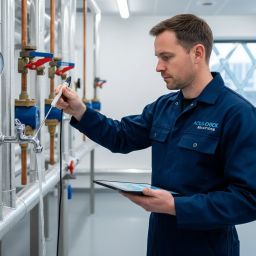
Across the UK, water hygiene management links risk assessments, monitoring and practical controls. The Health and Safety Executive says the monitoring regime for controlling Legionella in water systems should follow ACoP L8, the fourth edition published in 2013. For Salford Quays and Manchester properties, planned checks can help dutyholders track system conditions and respond to changes.
Temperature control is one part of that programme. The Health and Safety Executive advises setting a hot-water cylinder’s control temperature so water is stored at 60°C. Staff responsible for checks benefit from clear instructions on recording temperatures, flushing little-used outlets and reporting faults. Tenant guidance can explain how regular use and clean showerheads help limit conditions that support bacterial growth.
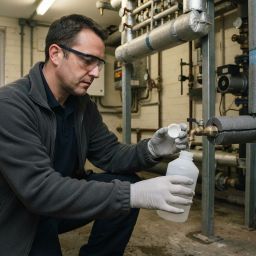
Sampling and laboratory analysis serve a different purpose from routine monitoring. Where an assessment identifies a need, samples can be collected from selected outlets and sent for analysis. Water sampling and laboratory analysis follow BS 7592; standard Legionella culture testing takes around 7-10 days to confirm a negative result. qPCR can provide indicative results within 24-48 hours, helping inform a timely response.
Energy and carbon considerations should sit alongside effective controls, not undermine them. Review temperature records and system operation to identify avoidable heating or water waste while maintaining the control measures set for the property. Avoid changing settings solely to reduce energy use without assessing the effect on water safety.
For a coordinated programme, combine assessment findings, monitoring records, staff responsibilities and any indicated sampling. A water hygiene quote request can be a practical next step for properties needing assessment or testing support in the area.
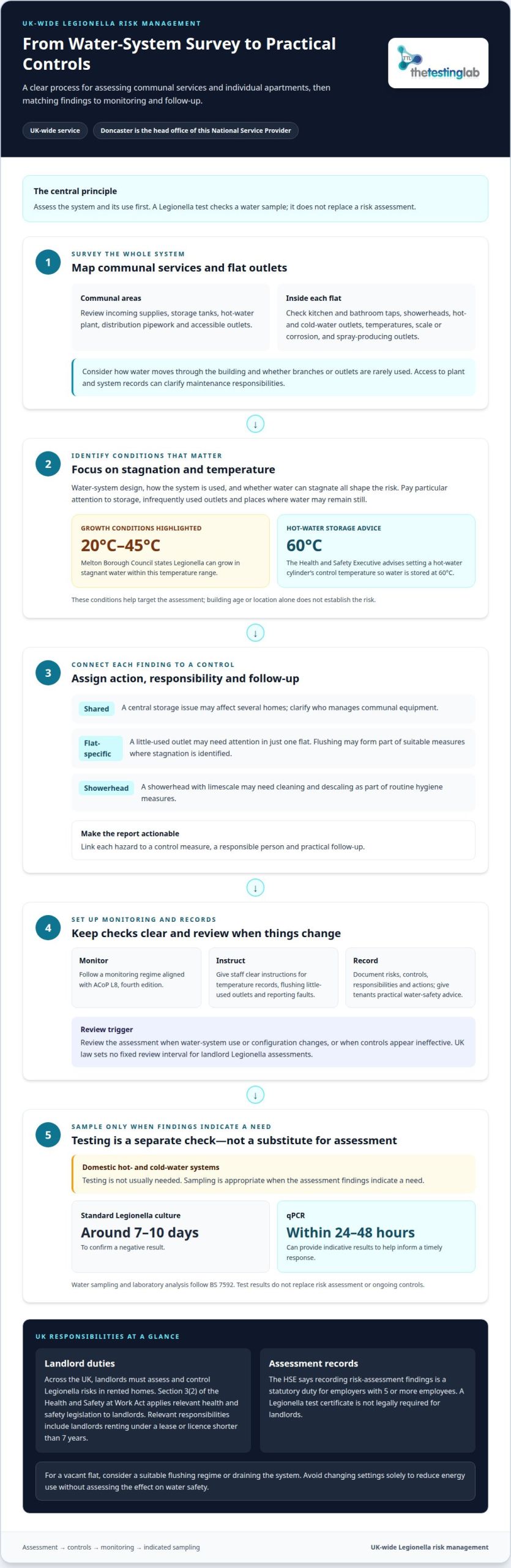
Legionella survey: communal and in-flat water systems
Across the UK, a survey should consider how the whole building’s water system operates, not just one tap. A Legionella prevention survey for Salford dockland apartments can map shared services and in-flat outlets to identify where water may stagnate.
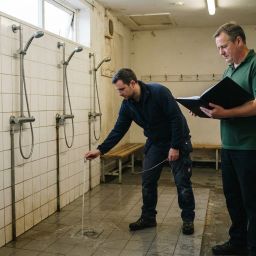
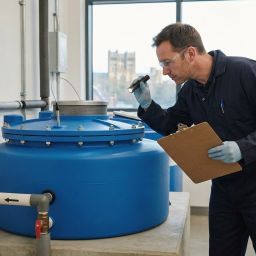
In communal areas, an inspection can review incoming supplies, storage tanks, hot-water plant, distribution pipework and accessible outlets. The assessor considers how water moves through these components and whether any branches or outlets are rarely used. For example, a little-used communal tap may need to be included in a flushing plan. Access to plant and system records can also clarify how maintenance responsibilities are organised.
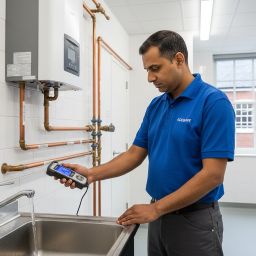
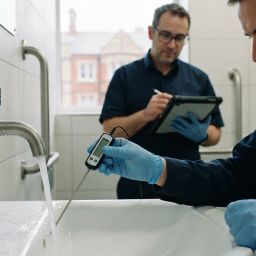
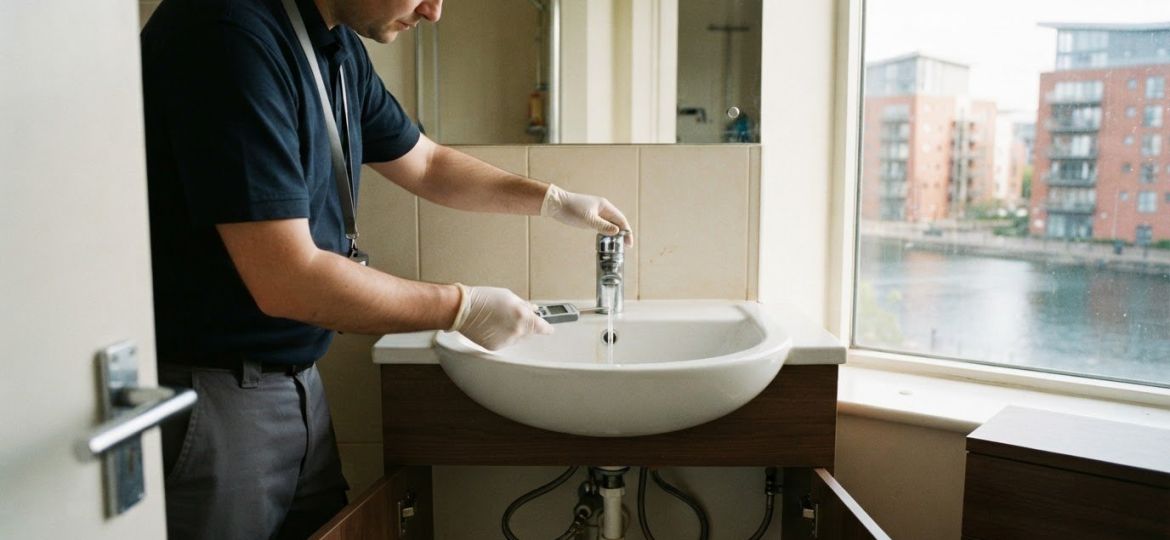
Within a flat, checks can cover the hot- and cold-water outlets residents use, including kitchen taps, bathroom taps and showerheads. The assessor can record temperatures, signs of scale or corrosion, and outlets that produce spray or water droplets. A showerhead with limescale, for example, may need cleaning and descaling as part of routine hygiene measures.
The survey should distinguish shared risks from flat-specific findings. A central storage issue may affect several homes, while a little-used outlet may need attention in just one flat. Clear findings link each hazard to a control measure, a responsible person and practical follow-up. This makes the report useful to landlords, managing agents and maintenance teams, rather than simply a record of observations.
For a structured review of communal and in-flat systems, request a Legionella survey quote.
The Testing Lab PLC
The Testing Lab PLC supports landlords and property managers with LCA-registered Legionella risk assessments and water testing across the UK. Its head office is in Doncaster, with local support for properties in Salford Quays and across Greater Manchester. An assessment helps identify hazards and suitable control measures, while testing provides water-sample analysis when indicated by the risk findings.
Quick Legionella Risk Assessments and Fast Legionella Testing support different stages of this work. The LCA-registered assessment reviews system risks and controls; testing examines samples and does not replace the assessment. This distinction helps property teams choose the service that addresses the question they need answered.
Contact The Testing Lab PLC to discuss your apartment building’s Legionella risk-management needs.
Turn survey findings into a practical next step
A legionella prevention survey for Salford dockland apartments can help property teams plan follow-up with a clearer purpose. The next decision is to match assessment or sampling to the issue requiring attention, whether building-wide or specific to water quality. The Testing Lab PLC offers Quick Water Testing, Quick Legionella Risk Assessments and Fast Legionella Testing. These services support a considered response without treating laboratory results as a substitute for understanding the water system. For UK landlords and managing agents, assigning responsibility for actions keeps follow-up connected to daily property management. Record the building’s intended use, system changes and the question the assessment must resolve. To discuss support for your property, contact The Testing Lab PLC. A clear starting point can help make the next stage easier to organise.
Frequently Asked Questions
What happens if legionella bacteria are detected?
A positive result should prompt a review of the affected system and its controls. The responsible person considers where the sample came from, how the system is used and whether other outlets could share the same conditions. Appropriate corrective measures may include cleaning, disinfection or changes to system management, followed by checks to assess whether controls are effective. A laboratory result alone does not establish the full risk.
How can Legionella be prevented?
Prevent Legionella by managing conditions that allow bacteria to grow and spread through water droplets. Keep hot water hot, cold water cold and water moving through the system. For example, include little-used outlets in a planned flushing routine, and clean and descale showerheads as needed. In UK buildings, controls should follow the system-specific risk assessment and relevant HSE guidance, including ACOP L8 and HSG274.
What is a Legionella prevention survey for apartment buildings?
A Legionella prevention survey is a structured review of a building’s water systems, hazards and controls. In an apartment block, the assessor considers shared plant and pipework as well as representative outlets inside flats. The findings help distinguish a common issue, such as a shared storage concern, from a local one, such as a rarely used shower. The report informs practical actions and responsibilities.
Which UK regulations require Legionella risk assessments in rented apartments?
Across the UK, landlords’ responsibilities are grounded in the Health and Safety at Work Act, including Section 3(2), which applies relevant health and safety legislation to landlords. Landlords must assess and control Legionella risks in rented domestic water systems. HSE guidance includes ACOP L8 and HSG274. UK law doesn’t require a landlord to obtain a Legionella test certificate.
How often should Legionella risk assessments be reviewed in residential blocks?
UK law does not prescribe a fixed annual or biennial review interval for a landlord’s assessment. Review it promptly if water systems or their use change, new risks emerge, or existing controls seem ineffective. If no relevant changes or signs of ineffective management arise, a review at least every two years is advised. A change to communal plant can affect several flats, so update the relevant records.

Article by
P J F Thomas
CEO and Founder of TTL plc.
Disclaimer
Items declared are AI generated but do reflect our services. Please get in contact if you have any questions.