
Fixed Fee Fire Risk Assessments for Bradford Shops
Bradford independent retailers need a suitable and sufficient fire risk assessment for their shop, under the Regulatory Reform (Fire Safety) Order 2005, according to The National Archives. A fixed-fee fire risk assessment in Bradford can help make the work and its scope clear, but the assessment must reflect the actual premises and risks.
It’s understandable to want a straightforward answer on whether your shop needs an assessment and what you’re responsible for. This guide explains the UK-wide duties that apply, how to judge an assessor’s competence, and which hazards and people at risk to consider. You’ll also see what to expect from the process and how changes to your premises can affect the assessment.
Key Takeaways
- Establish whether your shop is non-domestic premises and identify any shared residential areas; The National Archives says the Fire Safety Order requires suitable and sufficient assessments for both.
- Match the assessor’s knowledge and experience to your premises, and look for a clear report that sets out findings and practical actions.
- Walk the shop with fire safety in mind: consider escape routes, alarms, firefighting equipment, dangerous substances and anyone who may need extra help to evacuate.
- Revisit the assessment when changes to the layout, use or occupancy could make its findings outdated.
Legal duties under the Regulatory Reform (Fire Safety) Order 2005
UK-wide, the Regulatory Reform (Fire Safety) Order 2005 applies to fire safety in non-domestic premises. According to The National Archives (legislation.gov.uk), it requires suitable and sufficient fire risk assessments for Bradford’s non-domestic premises and the common parts of multi-occupied residential buildings. A fixed-fee fire risk assessment for Bradford independent retailers should reflect each shop’s layout, activities and hazards, including stock storage.
Review the assessment at least annually, and sooner if renovations, a change of use, layout or occupancy could make it outdated. The responsible person must arrange the assessment and act on its findings. Under Article 5(3), each person with control has duties to the extent of that control. A landlord and tenant may therefore both have responsibilities, depending on their control and lease obligations.
Record significant findings. Since 1 October 2023, employers with fewer than five employees no longer have an exemption from recording the assessment. Article 11(2) also requires recorded fire safety arrangements. For a retailer, these should connect hazards to an emergency plan, staff information and training. Article 9(2) requires dangerous substances to be considered, including relevant cleaning products or stored materials.
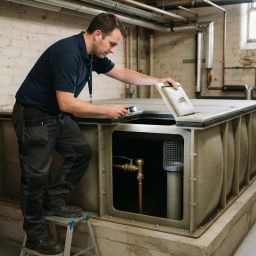
Use the UK fire safety guide for offices and shops as a practical reference; a warehouse or assembly space may need a different guide. Fire duties are separate from water-system risks, which are covered by a Bradford Legionella risk assessment. Bradford independent retailers arranging a fixed-fee fire risk assessment should define the shop areas and activities the assessment must cover.
The fee depends on the agreed scope. Factors include the shop’s size, layout, number of floors, occupancy, storage and hazards to assess. For a multi-floor or larger shop, make sure the scope accounts for each area. Confirm whether follow-up visits are included in the agreed work.
An assessment that is not kept suitable and up to date may leave hazards unidentified or emergency arrangements inadequate. West Yorkshire Fire and Rescue Service enforces fire safety legislation for Bradford’s non-domestic premises. Keep the findings current and address the recommended actions.
Choosing and verifying a competent assessor
Across the UK, the responsible person must ensure the assessor has relevant knowledge and experience. If you lack the expertise or time to carry out the assessment yourself, appoint a competent professional. For a fixed-fee fire risk assessment in Bradford, independent retailers should clearly define the shop areas and activities to be covered.
Before appointing an assessor, find out who will conduct the site visit and how their competence is evidenced. Check the named assessor’s entry on a relevant competence register, and check any claimed firm-level third-party certification separately. These are distinct checks: company certification alone does not establish the individual assessor’s competence.
Agree the assessment scope and report format in writing. The report should follow PAS 79 and give clear findings and practical actions, rather than a generic checklist. For example, it should connect blocked routes or poor emergency lighting to evacuation arrangements and explain what needs attention. A useful report helps the employer prioritise action and maintain fire safety compliance.
During the visit, expect the assessor to inspect the premises, ask about staff procedures and review relevant records. They should consider how customers and employees would respond in an emergency, whether escape routes are usable, and how safety checks are recorded. Explain any changes to the shop, such as altered storage or a new sales area, so the assessment reflects current conditions.
When you receive the report, compare each recommendation with the issue identified and assign responsibility for action. Keep the report with your fire safety records and ensure staff understand the evacuation arrangements. For Bradford independent retailers, a fixed-fee fire risk assessment is easier to scope when you clearly describe the premises, activities and required report deliverables.
Identifying fire hazards and people at risk
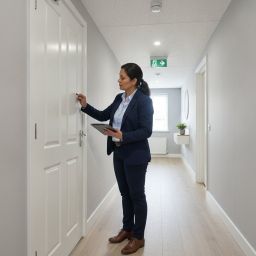
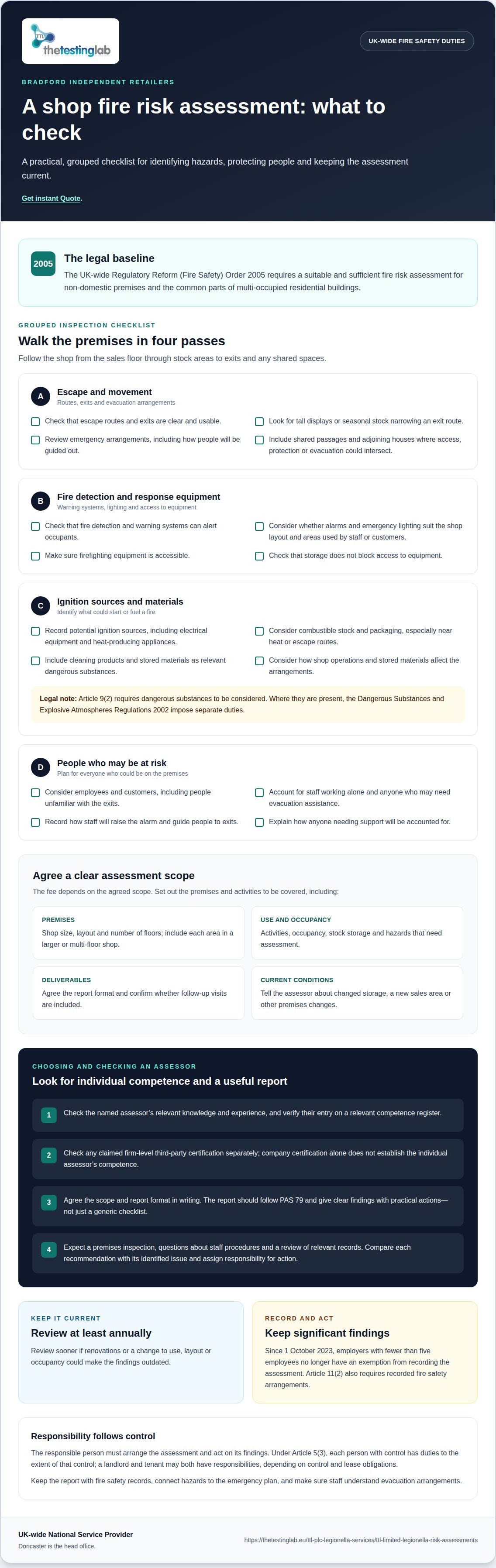
Under the Regulatory Reform (Fire Safety) Order 2005, a Bradford shop assessment should identify hazards, people exposed and ways to reduce risk. During a site inspection, map the layout from sales floor to stockroom, rear exit and shared passage. Include adjoining houses if access, protection or evacuation could intersect with the shop.
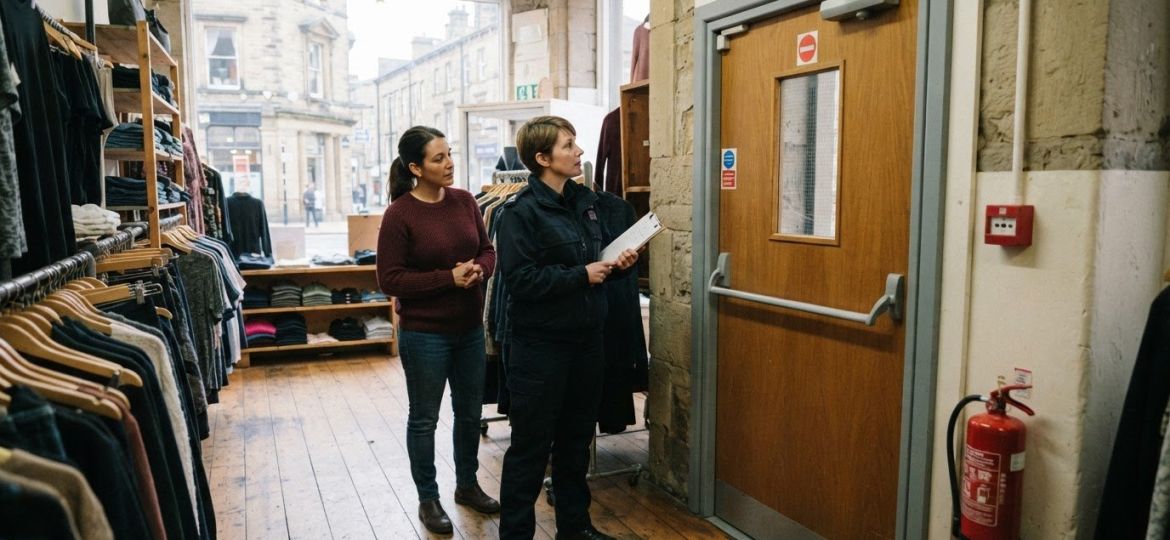
Inspect the premises systematically. Check that escape routes are clear, fire detection and warning systems can alert occupants, and firefighting equipment is accessible. Review emergency arrangements as well as physical conditions. For example, tall displays or seasonal stock can narrow an exit route, while poorly placed storage can block access to equipment.
- Record potential ignition sources, including electrical equipment and heat-producing appliances.
- Consider combustible stock, packaging and cleaning products, especially where storage is near heat or escape routes.
- Check whether emergency lighting and fire alarms suit the shop’s layout and areas used by staff or customers.
Consider everyone who could be at risk, not only people who work on the premises. Customers unfamiliar with the exits, staff working alone and people who may need evacuation assistance all affect the plan. Record how staff will raise the alarm, guide people to exits and account for anyone needing support. If your shop is in an industrial unit, consider how its operations and stored materials affect these arrangements.
Dangerous substances require specific consideration. Article 9(2) requires their assessment, and the Dangerous Substances and Explosive Atmospheres Regulations 2002 impose separate duties where they are present, according to The National Archives. Use national fire safety guidance for shops to structure the inspection, then record hazards and practical actions. For a separate water-system risk, request a quote for a Legionella risk assessment.
The Testing Lab PLC: Quick Water Testing
The Testing Lab PLC provides UK-wide services from its head office in Doncaster, supporting businesses in Bradford and across the region. Fire safety and water hygiene are separate assessment areas, but a retailer may need to manage both. Quick Water Testing can help investigate water quality. The Testing Lab PLC is LCA-registered for Legionella risk assessments, including Quick Legionella Risk Assessments and Fast Legionella Risk Assessment. Fast Legionella Testing is available when testing is the required next step.
Consider a water assessment if your shop has a water system that needs risk evaluation or monitoring. These services don’t replace a fire risk assessment or resolve fire hazards; they address a different part of premises management. For details about Legionella risk assessments, visit the assessment service page, or contact The Testing Lab PLC to discuss your water-system needs.
Make fire safety part of your next review
Make the assessment part of an ongoing process, rather than a document that sits untouched. Assign an owner to each recommended action and build routine checks into shop operations. If the layout, stock arrangements or day-to-day use changes, consider whether the assessment still reflects how people use the premises.
For Bradford independent retailers, a fixed-fee fire risk assessment should have a defined scope that reflects the shop’s actual conditions. Focus on practical decisions: who will complete each action, how staff will follow emergency procedures, and when the assessment will next be reviewed. This connects the written findings with everyday responsibilities.
If you also need support with water-related testing, you can send The Testing Lab PLC an enquiry about your requirements. Take the next step at a pace that works for your business, and keep improving your safety processes as your premises evolve.
Frequently Asked Questions
Do I Need a Fire Risk Assessment for My Shop, Office, Restaurant or Warehouse?
Yes, these are non-domestic premises, so the Regulatory Reform (Fire Safety) Order 2005 requires a suitable and sufficient fire risk assessment, according to The National Archives (legislation.gov.uk). The assessment should reflect how the premises operates, including public access, work areas and stock storage. If your business occupies part of a larger building, consider shared spaces and coordinate fire precautions with whoever controls them.
The legal duty: who needs an FRA in Bradford?
The responsible person must ensure the assessment is in place. This is usually the employer or person controlling the business premises; a self-employed person with business premises can also have duties. In a rented shop, the tenant may control the retail area while the landlord manages shared areas. Where responsibilities overlap, clarify who manages each area and how fire safety arrangements connect across the building.
How can Bradford retailers check a fire risk assessor’s qualifications and independence?
Look up the named assessor on a relevant competence register and check whether their experience suits your premises, including its customer areas and stock storage. Check any firm-level third-party certification separately. To assess independence, ask the assessor to disclose relevant commercial relationships and explain how findings are recorded objectively. Review the sample report structure for clear evidence, prioritised actions and a practical basis for decisions.
What are the risks and penalties for failing to maintain a suitable fire risk assessment?
An assessment that is not kept suitable and up to date may leave hazards unidentified or emergency arrangements inadequate. West Yorkshire Fire and Rescue Service enforces fire safety legislation for Bradford’s non-domestic premises.

Article by
P J F Thomas
CEO and Founder of TTL plc.
Disclaimer
Items declared are AI generated but do reflect our services. Please get in contact if you have any questions.