
Legionella Assessments for Lancaster Medical Centres
Get instant Quote. A legionella assessment for Lancaster medical centres should assess the water systems and identify whether testing or sampling is needed to investigate risk. Under the Health and Safety at Work etc Act 1974, people responsible for premises have health and safety duties, according to the UK legislation register.
For healthcare premises across the UK, ACOP L8 and HSE’s HSG274 Parts 1-3 provide relevant guidance for managing Legionella risks. Sampling can add useful evidence where an assessment identifies a reason to investigate water quality; it sits within a wider, site-specific process.
This article explains how Legionella assessments, guidance and sampling apply to medical centres in Lancaster, and what helps make the work effective. The Testing Lab PLC provides Quick Legionella Risk Assessments and Fast Legionella Testing, with its national service based from Doncaster.
Key Takeaways
- Understand how UK health and safety duties apply to Legionella risk assessments in medical centres and other healthcare premises.
- See how ACOP L8 and HSG274 Parts 1-3 inform a structured approach to assessing water systems.
- Learn how testing and sampling can help investigate water quality when the assessment identifies a reason to do so.
- Find out when a professional assessment or water testing can support a clear, practical response to Legionella risks.
Legionella risk assessments for medical centres and other healthcare premises
A Legionella risk assessment examines how water systems could create exposure risks in Lancaster healthcare premises. Across the UK, responsible people must assess and manage risks under relevant health and safety legislation.
Medical centre assessment scope
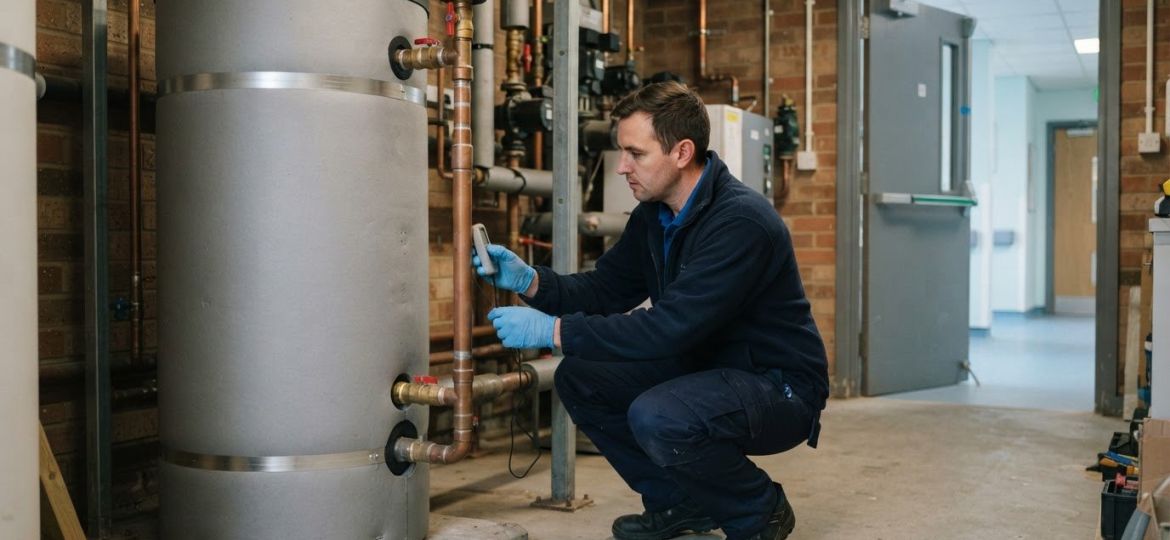
A specialist reviews the building’s hot and cold water systems, their operation and maintenance, and how water reaches outlets. The assessment considers conditions that could encourage Legionella growth, including stagnation and temperature control. A legionella assessment for medical centres in Lancaster should reflect actual use, such as consultation-room sinks and infrequently used outlets. Lancaster City Council advises that incoming and stored water in storage tanks should remain below 20 °C. It also advises that hot water should be distributed at 50°C or higher. Where a scald risk is identified, thermostatic mixer valves need to be fitted as close as possible to outlets, according to Lancaster City Council.
Legal responsibilities
The risk assessment obligation under the UK’s Health and Safety at Work etc Act 1974 is stated by the UK legislation register. Employers and people controlling premises are responsible for health and safety precautions that reduce Legionella exposure. That responsibility applies across Lancaster and the North West, not only within individual surgeries. Medical centres, surgeries and other healthcare buildings can have different system layouts and patterns of use. A legionella assessment for Lancaster medical centres should record relevant risks and practical control measures, supporting ongoing premises safety.
Reviewing assessment frequency
A medical centre in Lancaster should review its Legionella risk assessment regularly, with the review frequency based on the site’s risk profile rather than a single fixed interval. Revisit the assessment when changes could affect risk, such as alterations to water systems, building use or maintenance arrangements. A specialist can assess whether the existing findings still reflect the premises. This applies to healthcare sites and other buildings, including offices and mixed-use premises, where system design and occupancy differ.
ACOP L8 and HSG274 guidance
For medical centres in Lancaster and across the UK, ACOP L8 and HSG274 help frame a consistent approach to Legionella risk. Their value lies in connecting site conditions with documented control decisions.
ACOP L8 guidance
ACOP L8 is a key reference for people responsible for health and safety in premises with water systems. Use it to consider how bacteria could grow or spread, and whether existing controls suit the building’s operation. For example, a medical centre’s review should account for its facilities and water use, rather than relying on a generic checklist. The same careful assessment matters in residential properties, including those managed by landlords.
HSG274 guidance
The Health and Safety Executive names HSG274 Parts 1-3 as relevant technical guidance for Legionella risk assessments. The parts support a structured review of water-system risks and control arrangements. For a Lancaster surgery, a specialist can use the guidance to connect water temperature, system design and operational practice with recorded findings. This helps responsible people identify where further action may be appropriate, while keeping the assessment relevant to the premises.
Technical standards can add another reference point. BS 8580-1:2019 is also identified as relevant to Legionella risk assessments. Together, guidance and standards help shape a methodical assessment, but they don’t replace attention to each property’s system and use. This applies across the North West, including Preston, and to healthcare facilities as well as residential buildings.
Testing results can inform decisions alongside the assessment. A result greater than 100 cfu/l requires further investigation. Where findings call for a documented review of risks and controls, request a Legionella assessment.
Legionella testing and sampling
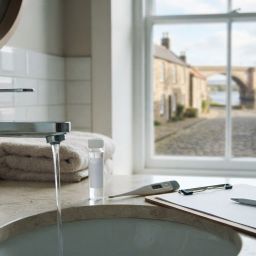
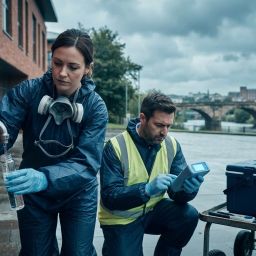
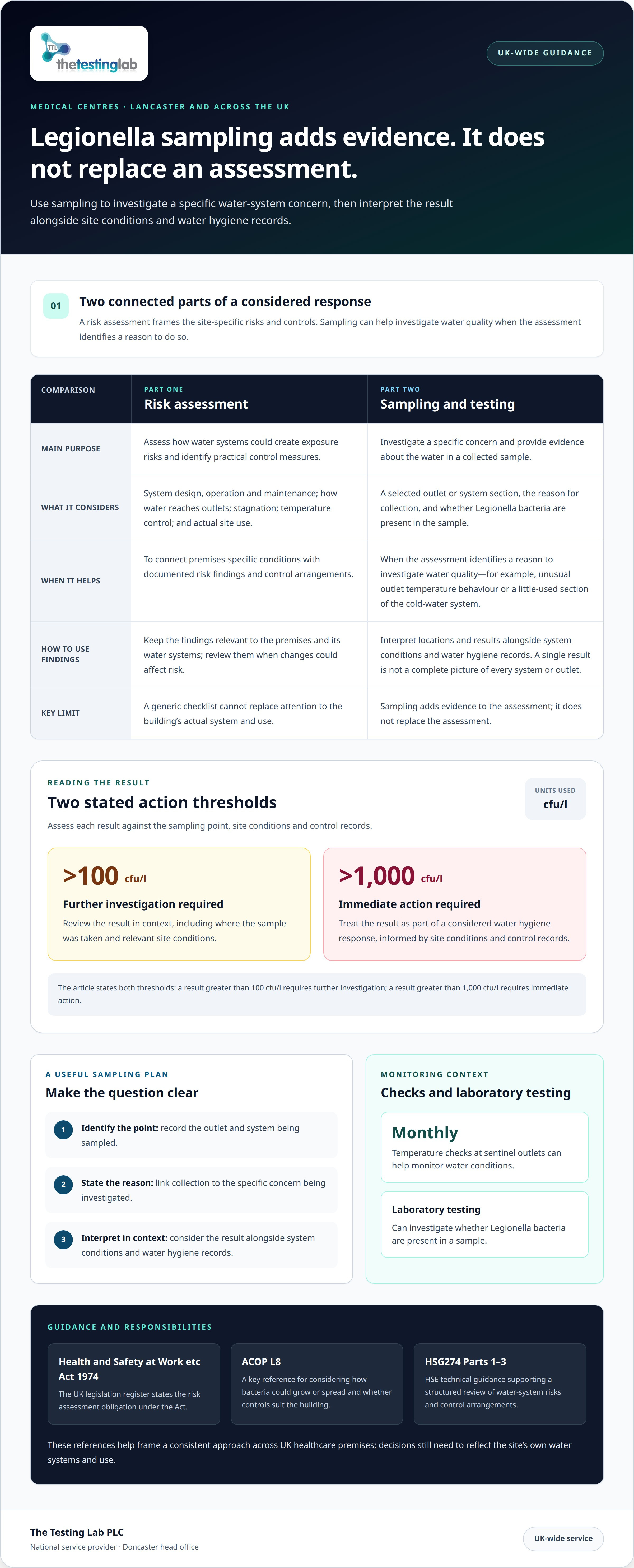
Sampling adds evidence to a Legionella risk assessment, but does not replace it. At medical centres, a specialist can select sampling points to investigate a specific concern, such as an outlet with unusual temperature behaviour or a little-used section of the cold-water system. Interpret the locations and results alongside system conditions and water hygiene records.
For a useful sample, the sampling plan should identify the outlet, system and reason for collection. Monthly temperature checks at sentinel outlets can help monitor water conditions, while laboratory testing can investigate whether Legionella bacteria are present in a sample. ACOP L8 and HSG274 provide context for managing risk, but sampling decisions should reflect the premises and its water systems, not follow a generic routine.
Results guide the next action. A Legionella result greater than 100 cfu/l requires further investigation. A result higher than 1,000 cfu/l requires immediate action. These thresholds make clear why a result should be assessed against the sampling point, site conditions and control records. A single result is evidence about that sample, rather than a complete picture of every cold water system or outlet in the building.
For a Lancaster medical centre, the practical takeaway is to connect sampling with a clear question: which part of the system needs investigation, and what will the result inform? The same method applies to premises in Preston and elsewhere in the North West. If testing is needed to investigate Legionella risk, request Legionella testing as part of a considered water hygiene response.
The Testing Lab PLC: Quick Legionella Risk Assessments
The Testing Lab PLC provides Quick Legionella Risk Assessments for medical centres in Lancaster and across the UK. Its Doncaster head office supports this national service provider’s work, helping premises identify water-system risks and consider appropriate controls. A professional assessment is useful when a centre needs a structured review, or when changes to its building or water systems prompt reassessment.
If the findings indicate that water quality needs investigation, Quick Water Testing or Fast Legionella Testing can provide relevant sampling evidence. Consider the assessment and testing together, so results contribute to a site-specific view of risk rather than standing alone.
To discuss a medical centre’s assessment or testing needs, contact The Testing Lab PLC.
Plan the next step for your premises
For a Legionella assessment at a medical centre in Lancaster, start by defining the premises and what the assessment needs to support. Relevant water-system records and details of operational changes help establish a focused scope, giving the reviewer useful context and helping the centre plan its next steps. Align the assessment with the site’s current needs rather than treating it as a routine paperwork exercise.
The Testing Lab PLC can discuss assessment and testing requirements for your premises. To take the next step, contact The Testing Lab PLC about your assessment. A clear starting point can help you move forward with confidence.
Frequently Asked Questions
What is a Legionella risk assessment for a medical centre?
A Legionella assessment is a structured review of a medical centre’s water systems and the risk of exposure. It considers system layout, how the premises are used and whether controls are appropriate. For example, an infrequently used consulting room may need different attention from a regularly used clinical area. The findings help those responsible decide on suitable control measures and follow-up.
What UK laws and guidance require Legionella risk assessments in healthcare premises?
The UK legislation register states that risk assessment is an obligation under the Health and Safety at Work etc Act 1974. ACOP L8 and HSG274 provide relevant HSE guidance for managing Legionella risks. The Health and Safety Executive names HSG274 Parts 1-3 as relevant technical guidance for risk assessments. These references help duty-holders frame their approach without treating guidance as a substitute for assessing each site.
What does a Legionella assessment for a medical centre include?
A professional assessment typically reviews system design, water outlets, temperature-control arrangements, maintenance information and building occupancy. It may identify areas for further investigation, such as infrequently used outlets or unclear system records. Sampling is considered when it can answer a specific question about water quality. The report should set out clear findings and practical actions for premises managers to consider.
Which contractors provide Legionella risk assessments for medical centres in Lancaster?
The Testing Lab PLC provides Quick Legionella Risk Assessments and is LCA-registered for Legionella risk assessments. Its local coverage includes Lancaster, Carlisle, Chester, Liverpool, Manchester, Preston, Salford, Berwick-upon-Tweed, Durham, Middlesbrough, Newcastle upon Tyne, Sunderland, Bradford, Doncaster, Huddersfield, Hull, Leeds, Sheffield and Wakefield. Medical centres in these locations can access its professional assessment service.
What records and documents should a medical centre keep after a Legionella assessment?
Keep the assessment report with relevant system plans, outlet or asset schedules, maintenance records, temperature-monitoring logs, sampling results and documented follow-up actions. These records help facilities managers understand what was assessed and track whether recommended controls were addressed. Record changes to water systems or building use alongside any updates, so future reviews reflect the centre’s current arrangements.

Article by
P J F Thomas
CEO and Founder of TTL plc.
Disclaimer
This guide gives general information only and is not legal advice. For advice on your site or samples, contact The Testing Lab PLC.