
Emergency asbestos air clearance for Bradford factory renovation
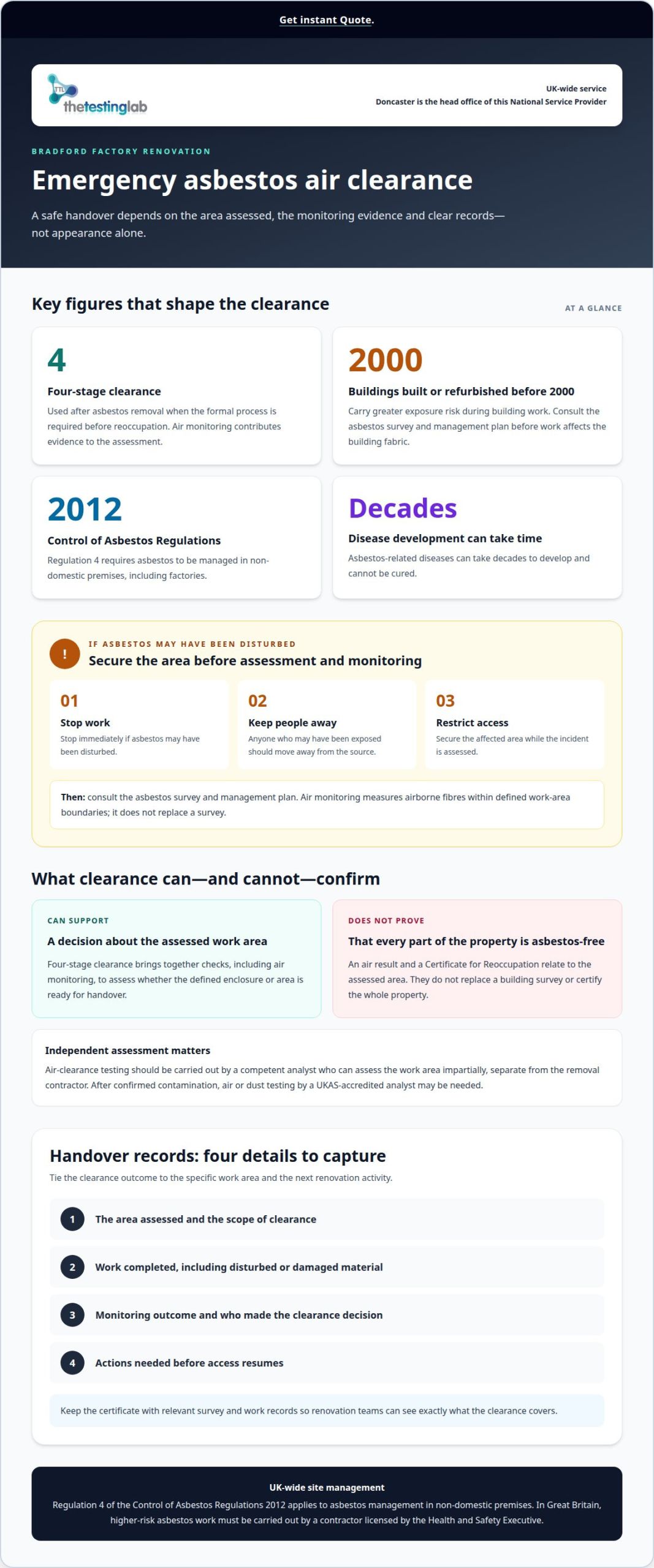
An air-clearance result is only one part of a safe factory handover. If asbestos may have been released during a Bradford factory renovation, stop work, keep people away and secure the affected area. Air monitoring and clearance should follow an assessment of the situation; where required, four-stage clearance is the applicable process.
Across the UK, Regulation 4 of the Control of Asbestos Regulations 2012 places a duty to manage asbestos in non-domestic premises. A clear air result doesn’t replace a building survey or certify that every part of a property is asbestos-free. This guide explains how air monitoring supports emergency work, who has clearance responsibilities and what handover records help document before renovation work can move forward. Doncaster is the head office of this National Service Provider.
Key Takeaways
- If asbestos is disturbed, stop work, keep people away and secure the affected area before assessment and monitoring proceed.
- Four-stage clearance can support the assessment, but an air result does not replace a building survey or prove every part of a property is asbestos-free.
- According to the Health and Safety Executive, the duty to manage asbestos applies to non-domestic premises across Great Britain; clear responsibility and records matter at handover.
- Use handover records to document the clearance outcome and support decisions about when renovation work can safely resume.
Air monitoring during and after asbestos work
If asbestos may have been disturbed during a Bradford factory renovation, stop work immediately. Keep workers and other occupants away, then restrict access to the affected area. Anyone who may have been exposed should move away from the source. These steps help prevent further disturbance while the incident is assessed.
Before work on a building’s fabric, consult its asbestos survey and management plan. Workers should not begin asbestos-related work until an appropriate survey has been completed, if one is required. Buildings built or refurbished before 2000 carry greater exposure risk during building work. Air monitoring measures airborne fibres within defined work-area boundaries; it does not replace a survey.
Reopening before clearance can expose workers to fibres if contamination remains. Asbestos-related diseases can take decades to develop and cannot be cured. According to the Health and Safety Executive, the duty to manage asbestos applies to non-domestic premises across Great Britain; Regulation 4 of the Control of Asbestos Regulations 2012 requires asbestos management in such premises.
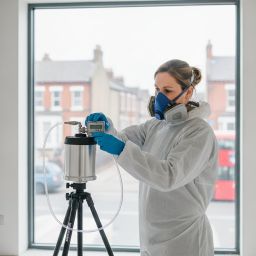
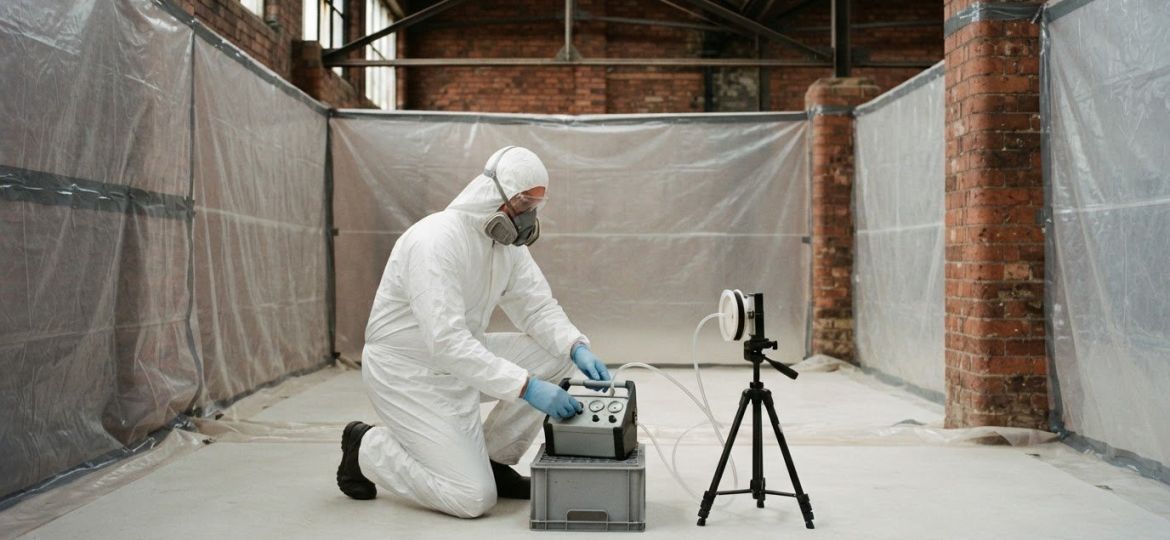
Emergency asbestos air clearance during a Bradford factory renovation requires monitoring suited to the work area and the applicable clearance process. Four-stage clearance may be used after asbestos work, with each stage contributing evidence to the reoccupation decision. In Great Britain, higher-risk asbestos work must be carried out by a contractor licensed by the Health and Safety Executive. Clearance records should identify the area assessed and the monitoring outcome, allowing renovation teams to make a controlled handover rather than relying on appearance alone.
Clearance responsibilities and handover records
A reliable handover connects the clearance outcome to the specific work area and the next renovation activity. For an emergency asbestos air clearance in a Bradford factory renovation, records should make clear what was assessed and who made the clearance decision.
Four-stage clearance requirements
Four-stage clearance is used after asbestos removal when this formal process is required before reoccupation. It brings together a sequence of checks, including air monitoring, to assess whether the work area is ready for handover. The assessment applies to the defined enclosure or area, not automatically to the whole factory. Record the scope alongside the result.
Independent air clearance testing
Independent air-clearance testing should be carried out by a competent analyst who can assess the work area impartially. The analyst’s role is separate from that of the removal contractor, keeping the clearance assessment independent of the removal work. After confirmed contamination, air or dust testing by a UKAS-accredited analyst may be needed. The assessment should reflect the incident and the work completed.
Recording the clearance handover
Handover records should identify the area assessed, work completed, monitoring outcome and actions needed before access resumes. A Certificate for Reoccupation does not certify that every part of a property is asbestos-free. Keep the certificate with relevant survey and work records, so renovation teams can see what the clearance covers. For an emergency asbestos air clearance Bradford factory renovation handover, document any disturbed or damaged material and how possible release was addressed.
For a project-specific next step, request a quote for asbestos work with the affected area and work details.
Which UK regulations govern asbestos air testing and clearance?
Across the UK, the Control of Asbestos Regulations 2012 provide the legal framework for managing asbestos risks. Regulation 4 requires asbestos to be managed in non-domestic premises, including factories. The duty focuses on identifying asbestos-containing materials and managing their condition, location and risk. Air testing supports particular work or clearance decisions; it does not replace the building’s asbestos survey.
Before work affects a Bradford factory’s fabric, consult the asbestos survey and management plan. Workers should not begin asbestos-related work until an appropriate survey has been completed, if one is required. If suspected asbestos is disturbed, stop work and restrict access while the area is assessed. This connects the legal management duty with practical site controls.
Contractor licensing depends on the category of asbestos work. In Great Britain, higher-risk asbestos work must be carried out by a contractor licensed by the Health and Safety Executive. Asbestos awareness training does not authorise workers to carry out asbestos work. This distinction matters when renovation plans involve removal or repair rather than managing material in place.
Air monitoring can contribute evidence during clearance, but an air result alone cannot establish that an entire building is asbestos-free. Four-stage clearance may be used after asbestos work, with the result relating to the assessed area. The Health and Safety Executive strongly recommends UKAS-accredited asbestos surveying organisations. Keeping survey findings, monitoring results and clearance records together supports traceable decisions under the UK framework.
For an asbestos project requiring coordinated assessment and records, request a quote for your project.
The Testing Lab PLC
The Testing Lab PLC supports UK-wide site management with environmental testing and water services. For a Bradford factory renovation, asbestos clearance decisions depend on the appropriate assessment, monitoring results and handover records described above. Water risks may also need to be managed during refurbishment.
Relevant services include Quick Water Testing, Quick Legionella Risk Assessments, Fast Legionella Testing and Fast Legionella Risk Assessment. These address water quality and Legionella risk, not asbestos air clearance. The Testing Lab PLC is a nationwide service provider headquartered in Doncaster.
If you’re coordinating site testing alongside renovation work, contact The Testing Lab PLC.
Plan the next site decision
For emergency asbestos air clearance during a Bradford factory renovation, use the recorded clearance outcome to plan the next work package, rather than simply restarting the programme. Tie the decision to the area and work assessed, and coordinate any remaining site risks before renovation resumes.
The Testing Lab PLC supports UK-wide site needs with Quick Water Testing, Quick Legionella Risk Assessments and Fast Legionella Testing. These services address water and Legionella concerns separately from asbestos air clearance. A clear scope helps align each testing requirement with the appropriate site decision.
To discuss relevant testing needs for your project, contact The Testing Lab PLC. A methodical next step can help keep site planning clear and coordinated.
Frequently Asked Questions
What is emergency asbestos air clearance after factory renovation?
Air clearance assesses airborne asbestos fibres after an unexpected disturbance or asbestos work and helps inform whether a defined work area can be reoccupied. It focuses on the affected enclosure or space, rather than confirming the condition of the entire factory. Air monitoring cannot identify all asbestos-containing materials; a building survey addresses that separate question.
What air-test results and certificate are needed before a renovated factory can reopen?
Where four-stage clearance applies, the assessment includes air monitoring and records whether the assessed area meets the relevant clearance criteria. The handover may include a Certificate for Reoccupation, which applies to the area assessed and does not certify that every part of the property is asbestos-free. Keep the report with project records to provide a clear evidence trail for the reopening decision.
What steps are involved in asbestos air testing and site clearance?
A professional process starts by defining the area and purpose of testing, then selecting the appropriate monitoring and clearance procedure. For four-stage clearance, the analyst completes the required inspection and air-monitoring stages and records findings for the work area. If inspection or results identify remaining concerns, further assessment or remedial work is needed before reoccupation is considered.
What should a professional asbestos team do if renovation may have disturbed asbestos?
The team should stop work, prevent access to the affected area and arrange an assessment of the suspected release. A competent contractor can arrange sampling and analysis at a UKAS-accredited laboratory. If asbestos is confirmed, appropriate repair or removal follows, with air or dust testing considered where needed. Anyone with health concerns after exposure should seek advice from their GP or NHS 111.

Article by
P J F Thomas
CEO and Founder of TTL plc.
Disclaimer
This guide gives general information only and is not legal advice. For advice on your site or samples, contact The Testing Lab PLC.