
4 Stage Clearance Air Test in Salford: What Happens After Removal
Get instant Quote. After licensed asbestos removal, clearance checks help establish whether the area is suitable to return to use. A 4 stage clearance air test for Salford high-rise construction is carried out by an independent UKAS-accredited analyst, not the removal contractor. The process checks the work area and uses air monitoring to inform the clearance decision.
Removal being complete doesn’t mean the enclosure can simply come down: final cleaning, visual inspection and air monitoring all form part of the clearance sequence. This article explains why the checks follow licensed work, how enclosure dismantlement and final cleaning fit into the process, and how the typical clearance indicator of 0.01 fibres per millilitre is used. For high-rise construction teams in Salford, understanding each stage helps coordinate testing and handover, while keeping clearance focused on evidence that the area is suitable for its next use.
Key Takeaways
- Four-stage clearance follows licensed asbestos removal before the area can be reoccupied or handed back for another use.
- Understand how final cleaning and enclosure dismantlement fit into the clearance sequence, and why the order matters.
- Air monitoring uses phase contrast microscopy to count fibres; the typical clearance indicator is 0.01 fibres per millilitre.
- Separate construction water-quality needs can be addressed through Quick Water Testing.
Enclosure dismantlement and final cleaning
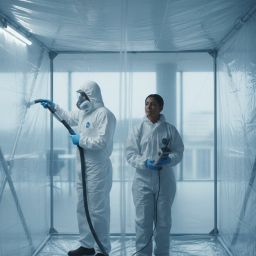
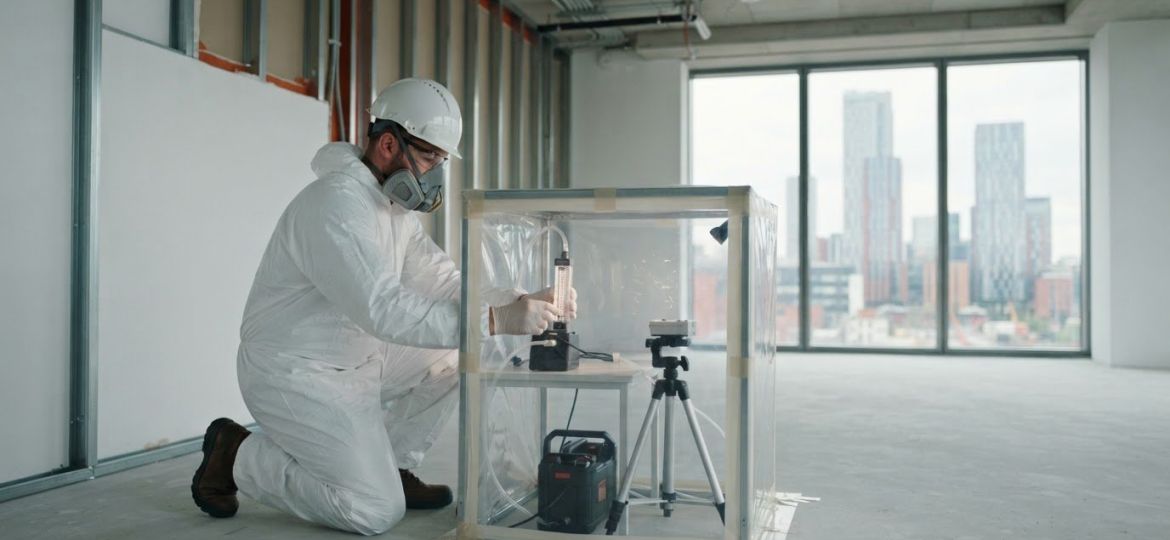
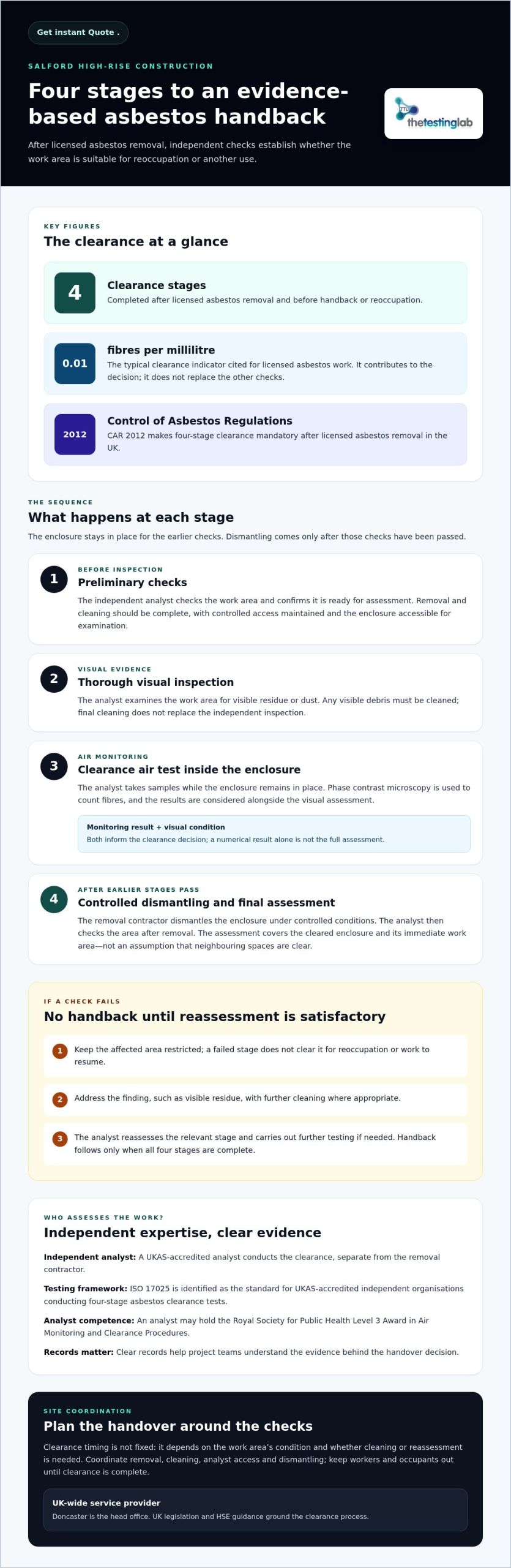
Enclosure dismantlement comes at the end of the four-stage clearance sequence, not immediately after asbestos removal. The analyst first completes preliminary checks, a thorough visual inspection and clearance air monitoring while the enclosure remains in place. Any visible residue or dust must be cleaned before clearance can progress. This sequence prevents dismantlement before the work area has passed the earlier checks.
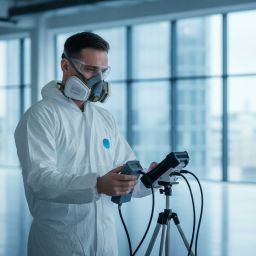
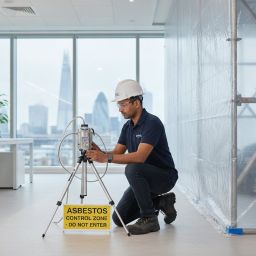
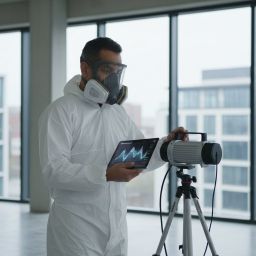
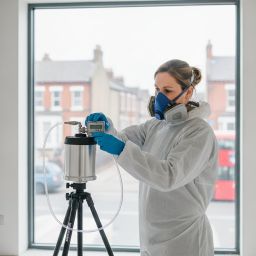
During air monitoring, the asbestos analyst takes samples inside the enclosure. The Health and Safety Executive describes using phase contrast microscopy to count fibres. Results contribute to the clearance decision, but the analyst also assesses the work area visually. If cleaning leaves visible debris on a surface, that surface needs attention before the process moves forward. In a 4 stage clearance air test Salford high rise construction project, this helps the team coordinate testing around the work zone.
Once the earlier stages are passed, the removal contractor dismantles the enclosure under controlled conditions. The analyst then carries out the final assessment, checking the area after the enclosure has been removed. In a Salford high-rise, this sequence matters around adjoining work areas, service routes and shared access points. The assessment concerns the cleared enclosure and its immediate work area, not an assumption that neighbouring spaces are clear. Plan the 4 stage clearance air test Salford high rise construction schedule around this final assessment.
Final cleaning helps achieve a satisfactory visual condition, but it does not replace independent assessment. If the final inspection identifies contamination, the area needs further cleaning and reassessment before handback. The area can be handed back for another use or reoccupation only after all four stages are complete. Construction teams can keep the process on track by coordinating removal, cleaning, analyst access and enclosure dismantlement, without treating dismantlement as permission to reoccupy.
Purpose of the four-stage clearance process after licensed asbestos removal
Four-stage clearance provides a structured check before a licensed work area is handed back. On UK projects, each stage contributes evidence to a controlled clearance decision. For construction teams in Salford, the process also sets a clear point for coordinating site access and follow-on work.
Governing requirements and guidance
The Control of Asbestos Regulations 2012 (CAR 2012) makes four-stage clearance mandatory after all licensed asbestos removal works. An independent UKAS-accredited analyst, rather than the removal contractor, conducts the assessment before reoccupation or another use. The typical clearance indicator is 0.01 fibres per millilitre. The Health and Safety Executive describes air monitoring inside the enclosure using phase contrast microscopy to count fibres. These requirements give the 4 stage clearance air test Salford high rise construction teams plan around a clear compliance purpose, while keeping assessment independent from removal.
Clearance timing and preparation
There is no single fixed duration for every clearance. Timing depends on the work area’s condition and whether cleaning or reassessment is needed. Before the analyst arrives, complete removal and cleaning, maintain controlled access, and make the enclosure accessible for examination. For 4 stage clearance air test Salford high rise construction planning, align analyst access with site security and the works programme. This reduces avoidable interruptions and helps keep the handover sequence organised.
Responding to a failed stage
If a stage fails, the area cannot proceed to handback. Findings such as visible residue or an unsatisfactory monitoring result require remedial action, typically further cleaning where appropriate. The analyst then reassesses the relevant stage and carries out further testing if needed. Keep the affected zone restricted and tell site teams its status: a failed result does not clear the area for reoccupation or work to resume.
For project testing arrangements, request a project quote.
What UK laws and HSE guidance govern asbestos clearance testing?
Across UK-wide construction planning, the Control of Asbestos Regulations 2012 (CAR 2012) provides the legal framework for licensed asbestos work. Four-stage clearance is mandatory after licensed asbestos removal. It establishes a formal assessment before an area is reoccupied or returned to another use. For Salford project teams, this links clearance to safe handover rather than treating it as an optional final check.
Independent assessment is central to the process: a UKAS-accredited analyst conducts clearance, separate from the removal contractor. ISO 17025 is identified as the standard for UKAS-accredited independent organisations conducting four-stage asbestos clearance tests. Competence also matters; a UK asbestos analyst may hold the Royal Society for Public Health Level 3 Award in Air Monitoring and Clearance Procedures. These credentials relate to the analyst’s role and the quality framework for testing.
The Health and Safety Executive describes air monitoring inside the enclosure using phase contrast microscopy to count fibres. The typical clearance indicator for licensed asbestos work is 0.01 fibres per millilitre. The analyst considers the monitoring alongside the other clearance stages, so a numerical result doesn’t replace the required assessment of the work area. Clear records help project teams understand the basis for the handover decision.
For a high-rise site, plan access and coordination around the controlled work area, while keeping workers and occupants out until clearance is complete. That makes the legal process operationally clear across the project, from removal through formal handback. To discuss project testing requirements, submit a quote request.
The Testing Lab PLC: Quick Water Testing
The Testing Lab PLC provides Quick Water Testing for separate water-quality needs on construction and redevelopment projects. Asbestos clearance and water testing address different issues, so water sampling is a separate workstream, not part of the four-stage clearance decision. For example, teams preparing a building for occupation may need to consider water quality alongside asbestos handover.
Where a building’s water systems need assessment, The Testing Lab PLC also offers Quick Legionella Risk Assessments and Fast Legionella Testing. These services support water-system risk management; they don’t replace asbestos clearance or determine whether an enclosure can be handed back.
The Testing Lab PLC is a national service provider with its head office in Doncaster, serving clients across the UK. To discuss a water-system risk assessment, visit the Legionella risk assessment page or contact The Testing Lab PLC.
Make the clearance milestone part of your next project decision
Before scheduling follow-on work, assign a site contact to coordinate access, handover information and the construction programme. This helps teams understand when the cleared area can rejoin the wider workflow and reduces confusion between separate work zones. A 4-stage clearance air test for Salford high-rise construction is most useful when its outcome feeds directly into those practical site decisions.
Keep the next action proportionate to the project: arrange asbestos clearance support for asbestos-related requirements, and handle water-system concerns as a separate workstream. The Testing Lab PLC can help discuss testing requirements relevant to your project. Request a quote for your project, then move into the next phase with a clear plan and a well-coordinated team.
Frequently Asked Questions
What Is the Four-Stage Clearance Process After Asbestos Removal?
It is a sequence of checks used to decide whether a licensed asbestos work area can be handed back. The stages cover site condition, visual inspection, air monitoring and assessment after enclosure dismantlement. Across UK projects, the Control of Asbestos Regulations 2012 and guidance including HSG247 – The licensed contractors’ guide, HSG248 – The Analysts’ Guide and HSG210 – Asbestos Essentials inform compliance practice.
How is the third stage – air monitoring – conducted?
During clearance air monitoring, an analyst samples air inside the enclosure to measure airborne fibres. Phase contrast microscopy is used to count fibres in the samples. On a Salford high-rise project, the sampling plan should match the defined work area, rather than treating an entire floor or building as a single test zone.
What happens during the first stage – the preliminary site condition check?
Before the formal visual examination and monitoring, the analyst checks that the site is ready for assessment. This includes confirming that removal work appears complete, the enclosure remains suitable and the relevant work area is accessible. Stored materials or equipment blocking a corner, for example, can prevent a thorough inspection, so the area must be made accessible first.
What happens during the second stage – the thorough visual inspection?
The analyst examines the work area closely for visible asbestos debris, dust or residue. The inspection should cover less obvious places, including ledges, joints and areas around fixed equipment, not just open floor space. A clean-looking entrance alone is not enough: the analyst needs access to the surfaces and features affected by the removal work.
What is assessed during the fourth stage – the final assessment?
After enclosure dismantlement, the analyst assesses the area again for contamination that may have become visible or accessible. Surfaces previously concealed by the enclosure, for example, may now need examination. If the final assessment identifies a concern, the area is not ready for handback; the issue must be addressed before the clearance decision is complete.

Article by
P J F Thomas
CEO and Founder of TTL plc.
Disclaimer
Items declared are AI generated but do reflect our services. Please get in contact if you have any questions.