

Accredited Asbestos Consultancy in Chester for Historic Property Conservation
Get instant Quote. How can you plan asbestos assessment for a historic property in Chester without derailing conservation work? The key is to establish the evidence and project sequence early. For accredited asbestos consultancy Chester historical property conservation projects, a carefully scoped assessment can help identify risks while taking the building’s character into account.
It’s understandable to worry that survey findings could disrupt refurbishment plans, particularly where later services or alterations may conceal asbestos. Under the Control of Asbestos Regulations 2012, asbestos risks must be managed where the duty applies, but discovery doesn’t automatically mean materials must be removed. Clear findings help inform proportionate next steps.
This article explains how consultancy and survey planning can support conservation decisions, what accreditation means, and how UK-wide support can serve Chester. The Testing Lab PLC has over 18 years of industry experience, a UKAS-accredited laboratory (7758), and its head office in Doncaster.
Key Takeaways
- See how accredited asbestos consultancy Chester historical property conservation can connect survey evidence, project risks and planned works without assuming asbestos is present.
- Learn how to prepare for an assessment by defining the work, gathering building information, agreeing the survey scope and reviewing the findings.
- Understand how management surveys differ from refurbishment and demolition surveys, and why the right scope depends on the work planned under the Control of Asbestos Regulations 2012.
- Discover how The Testing Lab PLC supports historic property projects in Chester and UK-wide, with accredited survey and sample analysis scopes.
Why historic properties in Chester need a considered asbestos consultancy approach
A historic building’s age alone doesn’t confirm that asbestos is present. Later alterations may have introduced materials during the twentieth century, while records can be incomplete or describe only visible parts of the property. Evidence is therefore essential before repairs or refurbishment are planned. Background on asbestos and its historic uses is available in this overview of asbestos.
Asbestos consultancy is project-specific advice that connects survey evidence, assessed risk and the work proposed. It helps owners and project teams understand what findings mean for sequencing, access and conservation decisions. For accredited asbestos consultancy Chester historical property conservation projects, the assessment should be shaped around the building and planned scope, not assumptions based on age or appearance.
What does asbestos consultancy contribute to conservation planning?
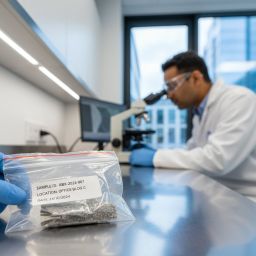
Consultancy and project oversight interpret findings and help apply them to decisions. Survey work identifies and assesses accessible materials; laboratory analysis identifies asbestos in submitted samples. These are distinct activities that inform one another. A consultant can help translate the evidence into practical options, so project teams can consider risks alongside the effect of proposed work on historic fabric.
Whether an identified material can remain in situ depends on its condition, the risk of disturbance and the planned work. If it’s in good condition and unlikely to be disturbed, it may be managed in place rather than removed. Conservation-sensitive planning means using reliable evidence to manage asbestos risks while taking the property’s historic character into account; it doesn’t guarantee work will be disruption-free.
The Control of Asbestos Regulations 2012 provide the UK compliance framework where applicable. Relevant HSE guidance includes HSG247 – The licensed contractors’ guide, HSG248 – The Analysts’ Guide and HSG210 – Asbestos Essentials. The Testing Lab PLC’s asbestos consultancy service supports projects in Chester and UK-wide, with its head office in Doncaster.
How to plan asbestos assessment around a historic property project
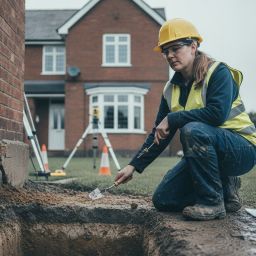
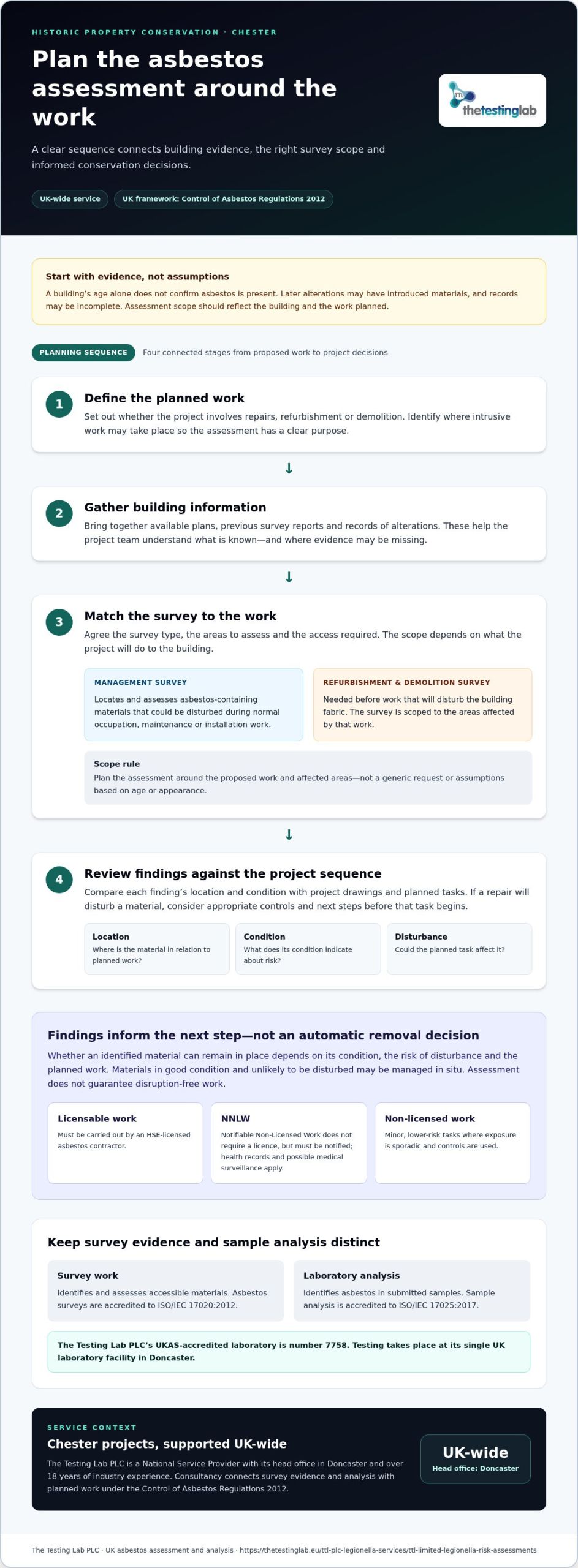
Start with the work, not a generic survey request. This gives the assessment a clear purpose and helps conservation teams understand which areas and materials could be affected. A practical sequence is:
- Define the planned work: identify repairs, refurbishment or demolition, including where intrusive work may take place.
- Gather building information: assemble available plans, previous survey reports and records of alterations.
- Scope the assessment: match the survey type and areas assessed to the work and access required.
- Review the findings: use locations, material condition and planned disturbance to inform the next project decisions.
A management survey helps locate and assess asbestos-containing materials that could be disturbed during normal occupation, maintenance or installation work. A refurbishment and demolition survey is needed before work that will disturb the fabric of the building, and is scoped to the areas affected. The Health and Safety Executive (HSE) guidance on asbestos supports understanding the UK framework under the Control of Asbestos Regulations 2012.
How should survey findings inform the next conservation decision?
Use the report to compare each finding’s location and condition with the project drawings and work sequence. If a planned repair will disturb a material, the team can consider appropriate controls and next steps before that task begins. Sample analysis can help identify asbestos in submitted samples; see the UKAS-accredited asbestos testing guide for more on this process.
Work is classified according to the task and risk: licensable work must be carried out by an HSE-licensed asbestos contractor; Notifiable Non-Licensed Work (NNLW) doesn’t require a licence but must be notified, with health records and possible medical surveillance; non-licensed work covers minor, lower-risk tasks where exposure is sporadic and controls are used. Many asbestos-containing materials in good condition can be safely managed in situ. To discuss project-specific assessment planning, request an asbestos consultancy quote.
Accredited asbestos consultancy in Chester, backed by UK-wide service
The Testing Lab PLC provides asbestos consultancy and testing in Chester and UK-wide. This National Service Provider has its head office in Doncaster and over 18 years of industry experience. For historic property conservation, local project needs are supported by a consistent national approach, with survey evidence and analysis helping owners and project teams make informed decisions under the Control of Asbestos Regulations 2012.
Accreditation scopes clarify how different parts of the work are assessed. Asbestos surveys are accredited to ISO/IEC 17020:2012, while sample analysis is accredited to ISO/IEC 17025:2017. The UKAS-accredited laboratory is number 7758. All testing takes place at the company’s single UK laboratory facility in Doncaster, supporting a clear link between analytical results and project reporting.
What happens when you request consultancy support?
Begin by outlining the property, available building records and the work being considered. This helps establish the project-specific scope, including which areas or materials need assessment. The asbestos consultancy service connects findings with planned work so that reports can support practical decisions, such as what needs further attention and how to plan the next project stage. The assessment is not an automatic instruction to remove materials.
Clear reporting is especially useful when conservation teams need to coordinate safety requirements with the care of historic fabric. It can help clarify the implications of identified materials for the proposed work and provide an evidence base for decisions. This is the purpose of accredited asbestos consultancy Chester historical property conservation: to bring relevant evidence, risk and project planning together.
Share the planned work and property information to begin defining a suitable scope. For project-specific support, Get instant Quote.
Set your conservation project up for its next decision
Historic buildings rarely follow a standard refurbishment template. The most useful next step is to bring the conservation priorities and the intended works into the same project discussion, so asbestos assessment can be considered in context. This helps the team identify what information will support decisions before methods and work sequences are finalised. For accredited asbestos consultancy Chester historical property conservation, a clear project brief gives the assessment a practical starting point.
Gather the available plans, records and outline of the proposed work, then set out the questions your team needs answered. The Testing Lab PLC can use this project context to shape consultancy support for properties in Chester and UK-wide. Get instant Quote to begin a conversation about your project’s requirements. With a considered evidence-led approach, you can move towards conservation decisions with greater clarity and confidence.
Frequently Asked Questions
Does a historic property in Chester always need an asbestos survey?
No. A building’s historic status alone doesn’t determine whether a survey is needed. Before deciding, check what records are available, how the property is used and whether the proposed work will affect building materials. For example, plans for opening a wall or replacing a ceiling call for different information from routine maintenance that leaves those areas untouched.
Do asbestos-containing materials in historic properties always have to be removed?
No, removal isn’t automatic. If a material is identified, record its location and condition so it can be considered alongside future maintenance and conservation work. Revisit that decision if the material deteriorates or the project changes and may disturb it. The appropriate work category depends on the task and risk, so don’t assume one approach applies to every material.
What does UKAS accreditation mean for asbestos testing?
UKAS accreditation indicates that a laboratory has been assessed as competent for the specific activities within its accredited scope. The Testing Lab PLC’s laboratory holds UKAS accreditation number 7758. Accreditation supports confidence in the relevant testing process, but it doesn’t predict what a sample will contain or decide what action suits a particular building. Interpret results in the context of the property and proposed work.
Can asbestos consultancy be planned around historic-property conservation work?
Yes. Share the conservation brief, project drawings and known access constraints when defining the assessment. This gives the project team a clearer basis for coordinating site investigation with other planning activities, such as documenting vulnerable finishes or arranging access to concealed spaces. The scope should be tailored to the building and proposed work; it can inform coordination but can’t guarantee that disruption will be avoided.

Article by
P J F Thomas
CEO and Founder of TTL plc.
Disclaimer
Items declared are AI generated but do reflect our services. Please get in contact if you have any questions.