

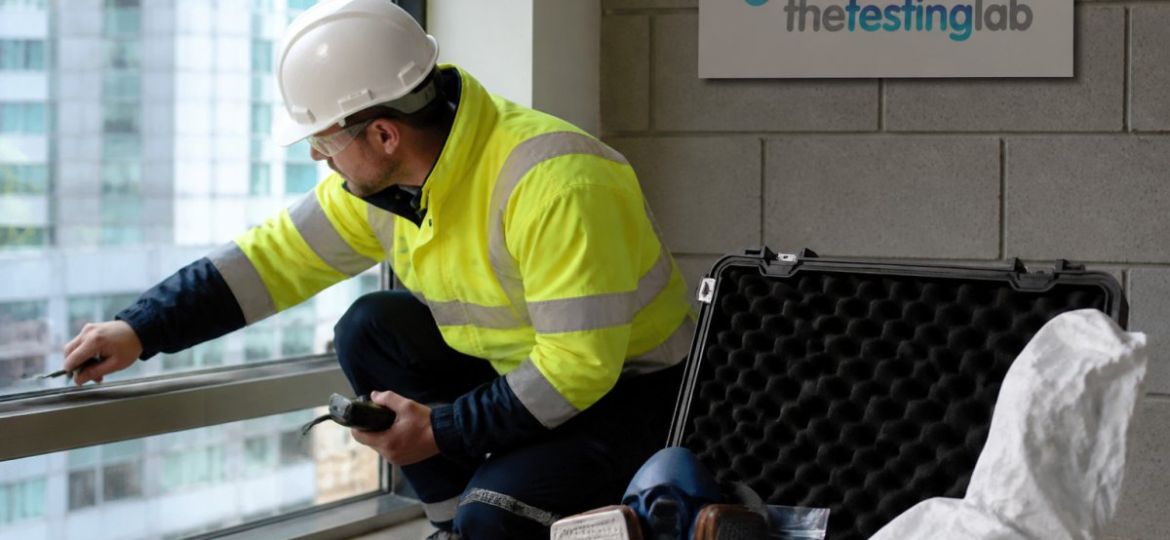
Eurotest or ALS Global for Building Safety Testing?
Last Updated: October 30, 2026
Quick Summary
Eurotest and ALS Global both suit building safety testing, but the right choice depends on the workstreams you need covered. Check each provider’s UKAS schedule of accreditation against the exact test methods in your specification, not the logo on its website. Build a method matrix to compare them like for like before requesting quotes.
- Check UKAS schedules, not logos, to confirm each required method is genuinely in scope.
- Build a one-page list of workstreams, methods and accreditations before requesting quotes.
- Ask who carries out fieldwork and who signs off each report for every workstream.
- Request an anonymised sample report for each workstream you need before deciding.
- Verify scheme registrations such as Legionella Control Association membership with the scheme itself.
Table of Contents
- Why Compare Eurotest and ALS Global for Building Safety Testing?
- What Each Provider Offers for Building Safety Testing
- Accreditation and Test Method Coverage Compared
- Building a Multi-Site Building Compliance Checklist
- How to Choose a Building Compliance Provider
- Building Safety Testing Turnaround Time and Service Logistics
- Asbestos Survey Providers: Where Specialist Testing Fits
- Choosing Your Next Step for Building Safety Testing
- Frequently Asked Questions
Choosing between Eurotest and ALS Global for building safety testing is a practical decision, and it deserves more than a glance at two websites. Facilities managers, compliance officers and property managers all need reliable, accredited testing, and the right supplier depends on what your portfolio actually needs. At The Testing Lab, we have built this comparison around the questions buyers ask most often, so you can weigh the options against your own requirements.
Why Compare Eurotest and ALS Global for Building Safety Testing?
Building safety testing covers many areas of work, from asbestos surveys and legionella risk assessments to materials and geotechnical testing. A supplier that handles one area well may not be the strongest choice for another. Comparing providers side by side helps you see where each one fits.
Many organisations shortlist providers based on reputation alone. A more useful approach is to check accreditation, service range, reporting, and how each supplier handles multi-site work. Those factors tend to matter more once a project is underway than a headline price.
What Each Provider Offers for Building Safety Testing
A useful comparison starts by mapping the building-safety workstreams you actually need, then checking each provider against that map. The table below sets out the categories that most commonly appear in a building-safety brief, with the questions to put to any supplier, including Eurotest and ALS Global, before you shortlist.
| Workstream | What to verify | Why it matters |
|---|---|---|
| Asbestos surveys and bulk analysis | Whether surveying and laboratory analysis are in-house or subcontracted; UKAS accreditation for bulk identification and air monitoring | Handover points between surveyor and laboratory are where sampling errors and reporting delays tend to appear |
| Legionella risk assessment and water testing | LCA registration; UKAS accreditation for the specific water microbiology methods used | Risk assessments and laboratory results need to be read together, not as separate deliverables |
| Fire safety and materials testing | Reaction-to-fire and fire-resistance test methods inside the accredited scope; sample preparation arrangements | Fire test methods are highly specific; a general materials lab may not cover the method your project specifies |
| Geotechnical and ground investigation | Soil, rock and groundwater testing scope; drilling and in-situ capability; UKAS schedule coverage | Ground investigation often runs on a different programme from the building works, so lead times need separate scrutiny |
| Building fabric and materials | Concrete, mortar, aggregate and metals testing; site sampling versus laboratory-only service | Results are only as good as the sample; confirm who samples and how samples are transported |
| Air quality and indoor environment | Post-remediation verification, clearance testing and ventilation-related checks | Clearance work is often the gate to reoccupation, so turnaround matters more than headline price |
Two practical tests separate a genuine like-for-like comparison from a brochure exercise. First, ask each provider for a written scope of work keyed to your project, listing which services are delivered directly, which are subcontracted, and where the reporting is produced. Second, ask for a sample report for each workstream you need, not a marketing PDF, but an anonymised real deliverable, so you can judge whether the findings are actionable for a facilities manager or compliance officer.
A common pattern is that providers are strong in one or two workstreams and rely on partners for the rest. That is not automatically a problem, but it changes who is accountable when a result is challenged. If your brief spans asbestos, legionella and materials testing, ask directly who signs off each report and which organisation holds the accreditation for that method.
Build your service map before you request quotes. A one-page list of workstreams, methods and required accreditations makes every subsequent conversation comparable, and it stops suppliers from answering a narrower question than the one you asked.
Where a provider cannot confirm a service in writing, treat it as out of scope for your evaluation rather than assuming it is covered. That single discipline removes most of the ambiguity from a Eurotest versus ALS Global comparison.
Accreditation and Test Method Coverage Compared
Accreditation is the part of a supplier comparison that buyers most often skim and most often regret skimming. The logo on a website tells you an organisation holds accreditation; it does not tell you that the specific method your project specifies sits inside the accredited scope. The gap between those two things is where disputes, retests and programme slippage live.
How to read an accreditation schedule
UKAS publishes the schedule of accreditation for each accredited organisation, and it is the document to compare, not the certificate. Read it in four passes:
- Find the standard. Building-safety work commonly falls under ISO/IEC 17025 for testing and calibration laboratories and ISO/IEC 17020 for inspection bodies. Some work, such as proficiency testing providers, sits under different standards entirely.
- Find the method. Schedules list methods by reference, for example a British Standard or an in-house method, and state whether the method is within scope. A method listed as ‘out of scope’ or absent from the schedule is not accredited, however central it is to the supplier’s marketing.
- Check the site. Accreditation attaches to a named location and, where relevant, to specific activities at that location. If samples are analysed at a different site from the one you contracted with, confirm that site’s schedule too.
- Check the date. Schedules are revised. A schedule you downloaded two years ago may not reflect the current scope, so pull the current version on the day you evaluate.
Comparing two providers method by method
The practical technique is to build a method matrix. Down the left-hand side, list every test method or inspection activity your project requires, taken from the specification rather than from either supplier’s website. Across the top, put each provider. In each cell, record whether the method is in scope, at which site, and the schedule revision date. This turns a vague ‘are you accredited?’ conversation into a document-by-document comparison that survives scrutiny from a client, a principal designer or a building safety regulator.
A common pattern is that two providers both hold UKAS accreditation but overlap on only part of the method list. One may cover bulk asbestos identification and air monitoring while the other covers a broader materials suite but not clearance work. Neither is ‘better’ in the abstract; the matrix tells you which one fits the brief.
Beyond UKAS: scheme registrations that matter
UKAS accreditation is the backbone, but building-safety buyers should also check scheme registrations relevant to the workstream. Legionella control work is commonly associated with registration with the Legionella Control Association, and asbestos work is governed by the Control of Asbestos Regulations 2012, which sets out duties that a supplier’s procedures should reflect. Ask for the registration number and verify it with the scheme, rather than accepting a logo.
Do not accept a supplier’s own summary of its accreditation scope as evidence. Ask for the current UKAS schedule and, where a scheme registration applies, the registration details. A supplier that cannot produce these quickly is telling you something about how it will respond when a result is challenged.
Our own accreditation covers UKAS ISO/IEC 17020 and ISO/IEC 17025 work, and we are registered with the Legionella Control Association. The same evidence standard should apply to every provider on your shortlist, including us.
Building a Multi-Site Building Compliance Checklist
If you manage several buildings, a checklist keeps your testing consistent across the portfolio. Include the survey or assessment type for each site, the date of the last report, the next due date, and the named responsible person.
Your checklist should also record access arrangements, reporting format, and how remedial actions are tracked. A single supplier able to work across all your sites can simplify this considerably.
How to Choose a Building Compliance Provider
Start with the shortlist criteria that matter to your organisation: accreditation scope, service coverage, turnaround times, reporting quality, and support when something goes wrong. To understand the range of asbestos and legionella services we offer, you can learn more about TTL’s services. Then request quotes from each supplier using the same brief, so the responses are comparable.
Here is a simple checklist to use during evaluation:
- Confirm UKAS accreditation covers the exact methods you need
- Ask who carries out the fieldwork and whether they are qualified
- Check how reports are delivered and whether they are easy to act on
- Ask what is included in the quote and what is charged separately
- Request references from organisations of a similar size
Be wary of quotes that look attractively low. Hidden costs often appear during a project, such as additional sampling, access charges, or rework. Pricing depends on the number of samples, dates, and delivery requirements, so ask for a clear breakdown. For current prices or a tailored quote, the best route is to contact The Testing Lab directly.
Building Safety Testing Turnaround Time and Service Logistics
Turnaround time matters when a project is waiting on results. If water hygiene is on your list, you can explore our legionella risk assessment and water testing services to see what each involves. Ask each provider for typical report timescales and whether faster options exist for urgent work. Be cautious of promises that seem too fast to be realistic for thorough testing.
Logistics matter too. Consider how many visits a survey needs, how access is arranged, and how a provider covers different regions. Our national coverage includes local operatives across England, Scotland and Wales.
Asbestos Survey Providers: Where Specialist Testing Fits
Asbestos surveys and laboratory analysis are closely linked, and the quality of the lab work affects the reliability of the whole survey. When you assess a provider, check whether their testing is carried out in-house or outsourced, and whether the laboratory holds the relevant accreditation.
Our UKAS-accredited asbestos testing and surveys form part of our testing and inspection service.
Choosing Your Next Step for Building Safety Testing
The right choice depends on your accreditation requirements, the services you need, and how your portfolio is managed. Put Eurotest and ALS Global against the same written brief, then compare the scope, the reporting and the total cost on a like-for-like basis.
If you want to see how The Testing Lab would approach your building safety testing, request a quote and share your site list and compliance schedule. We are happy to talk through the scope before you decide.
Frequently Asked Questions
What building safety testing services does Eurotest provide?
Eurotest is a UK testing and inspection provider, and its published service information should be checked directly on its website before you shortlist it. Confirm the specific services you need, such as asbestos surveys, legionella risk assessments or environmental sampling, and ask for written confirmation that each is delivered under the accreditation you require. Requesting a scope-of-service document makes the comparison with other providers far more accurate.
What environmental testing services does ALS Global offer?
ALS Global operates laboratory and testing services across several sectors, and its environmental and building-related capabilities should be verified against its current service listings. Ask for the test methods, sample types and reporting formats relevant to your project. Comparing these against your brief will show whether a single provider can cover your requirements without subcontracting.
Which provider is better for multi-site building compliance?
The better choice depends on how many sites you manage, how consistent your reporting needs to be and whether you want one point of contact. Ask each provider how it handles multi-site programmes, how it standardises reports and how it schedules work across regions. A provider that can show a clear process for multi-site coordination will usually reduce admin for a portfolio manager.
What should facilities managers check before choosing a building safety testing provider?
Check accreditation for the specific services you need, confirm the test methods used and ask how results are reported and when. Also request a clear scope of work so there are no surprises on scope or delivery. Verify qualifications of the people who will attend site, and ask for references from organisations with a similar portfolio.

